
1 minute from Toyonaka Station
Legs with naturally flowing lines.
OsakaLeg Liposuction
Not too much, not too little. We read how fat is distributed around the whole thigh and on the calves, and design legs that look natural whether you’re standing or walking — the "restrained beauty" Wing clinic values.
Wing clinicToyonaka
Booking & Inquiries 06-6318-8774 Call
[Hours] 10:00-20:00 / Last entry 19:00
Not "slimming just one spot," but
naturally slimming the whole leg.
Liposuction is a medical procedure that physically reduces the number of fat cells themselves.
Legs cover a large area, and the thighs, knees, and calves are seen as one continuous line. Slimming just one spot can make steps between areas or sagging above the knee more noticeable.
Wing clinic first determines whether your legs look heavy because of fat, muscle, or bone structure (bow legs or knock knees), and then designs "leg lines that look natural from any angle, even when you walk."
Contents
Tap to jump to a section
CheckWho leg liposuction is suited to
- Your thighs won’t slim down even when you lose weight
- Your inner thighs rub together and there’s no gap when you put your legs together
- Your outer thighs stick out and you’re self-conscious in trousers
- Heaviness around your knees or calves makes your legs look shorter
- Fat on your calves keeps your lower legs from looking slim
- Fat-dissolving injections, body-contouring devices, and strength training haven’t made a difference
If even one of these applies, liposuction may be able to change the line of your legs itself.
However, it is not the best treatment for everyone. The first step is to determine whether it suits you.
At your examination, we check whether your legs look heavy because of fat, muscle, bone structure, or swelling, and recommend the best approach.
SUITABLEWell suited to
- People with plenty of pinchable subcutaneous fat on the thighs and calves
- People who want to see a change in leg size and shape in a single treatment
- People who want firm legs that are less likely to rebound
- People whose skin is elastic, or who can combine treatment with Quantum
CONSIDERNeeds careful consideration
- People whose main cause of bulk is muscle (such as muscular calves) or bone structure
- People with significant skin laxity who need excess skin treated first
- People with serious chronic illness, who take anticoagulants, or whose weight is well above the standard range
- After surgery 2 to 3 days of rest, or to cut down on standing work and long walks for 1 to 2 weeks or so: those for whom this is difficult
MechanismHow leg liposuction works
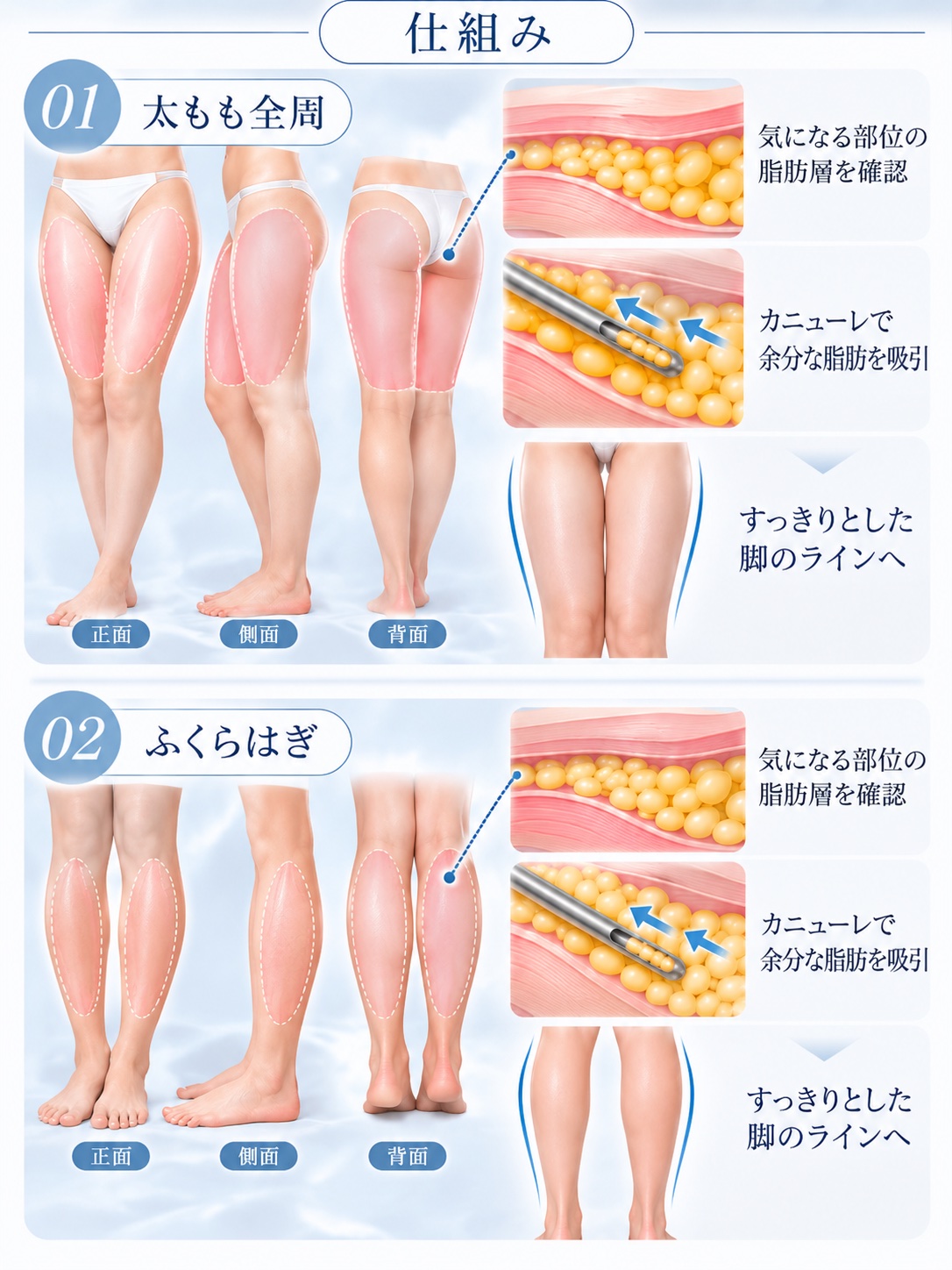
A surgical procedure in which a thin tube (cannula) is inserted under the skin to physically suction out fat cells. Its mechanism is fundamentally different from treatments that "destroy, burn, or dissolve" fat, and it directly reduces the number of fat cells.
Treatment begins with design in a standing position. How leg fat looks changes greatly when sitting, standing, and walking, so standing, we check how fat sits on the front, inner, outer, and back of the thighs, around the knees, and on the Calves. Calves are also checked on tiptoe to see the border between muscle and fat. Then we mark “how much to remove and how much to leave”. Next, anesthetic fluid is spread through the fat layer, swelling the fat while reducing pain, to make it easier to suction. Incisions are made at the groin or the crease below the buttocks for the thighs, and for the Calves behind the knee and so on, in places normally hidden, only 3 to 5 mm in size, and the cannula is inserted through them.
Leg fat is divided into deep and superficial layers. We reduce the deep layer to refine overall volume and shape, and leave the necessary thickness in the superficial layer just under the skin to keep the surface smooth. The inner thighs in particular have thin skin that easily develops steps, and the boundary under the buttocks can look droopy if too much is removed, so it is important to decide in advance where to deliberately leave fat. Finally, the doctor fine-tunes while checking asymmetry and irregularities by eye and by touch, finishing a line that flows continuously from the thigh through the knee to the calf. A major feature of liposuction is that once fat cells are reduced, they are unlikely to increase in that area. That is why fat is less likely to return to the same area and results are less likely to bounce back.
ProcessThe leg liposuction process
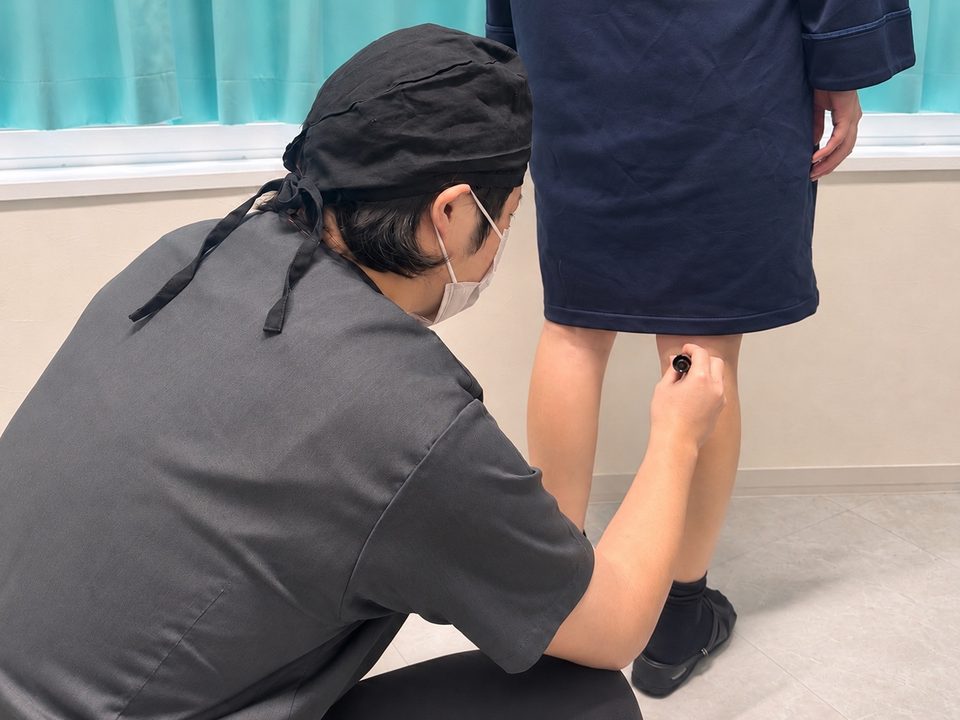 STEP 01
- Design and marking
We check fat distribution from the front, back, and sides while you stand, and check the boundary with muscle on the calves while you stand on tiptoe. We carefully mark "how much to remove and how much to leave."
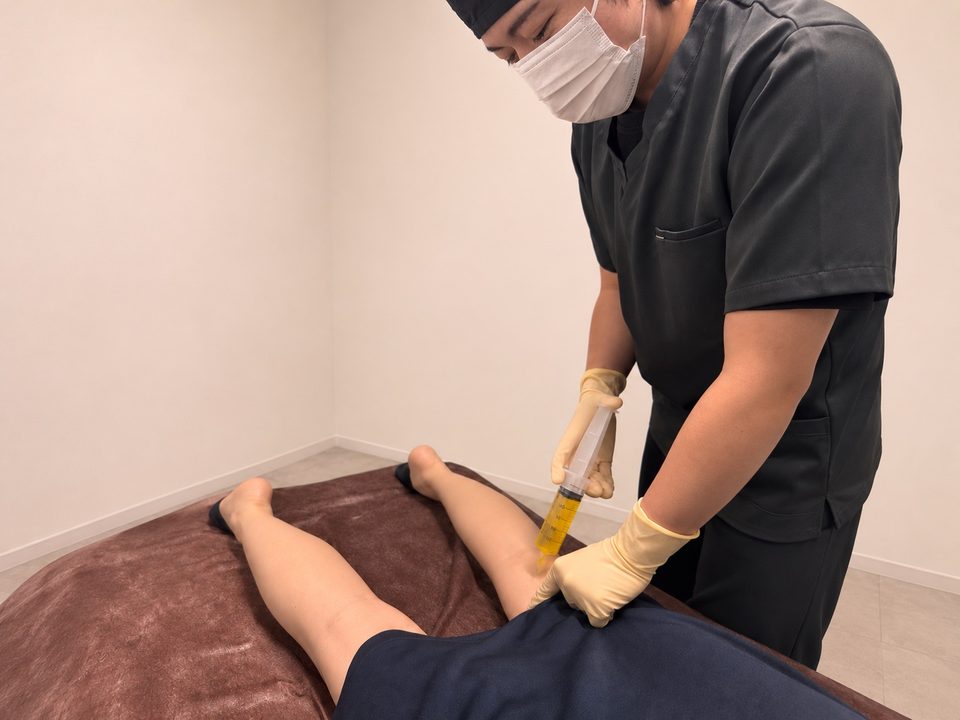 STEP 02
- Anesthesia
Under nitrous oxide sedation and IV sedation, anesthetic fluid is slowly injected into the fat layer to reduce pain and make suction easier.
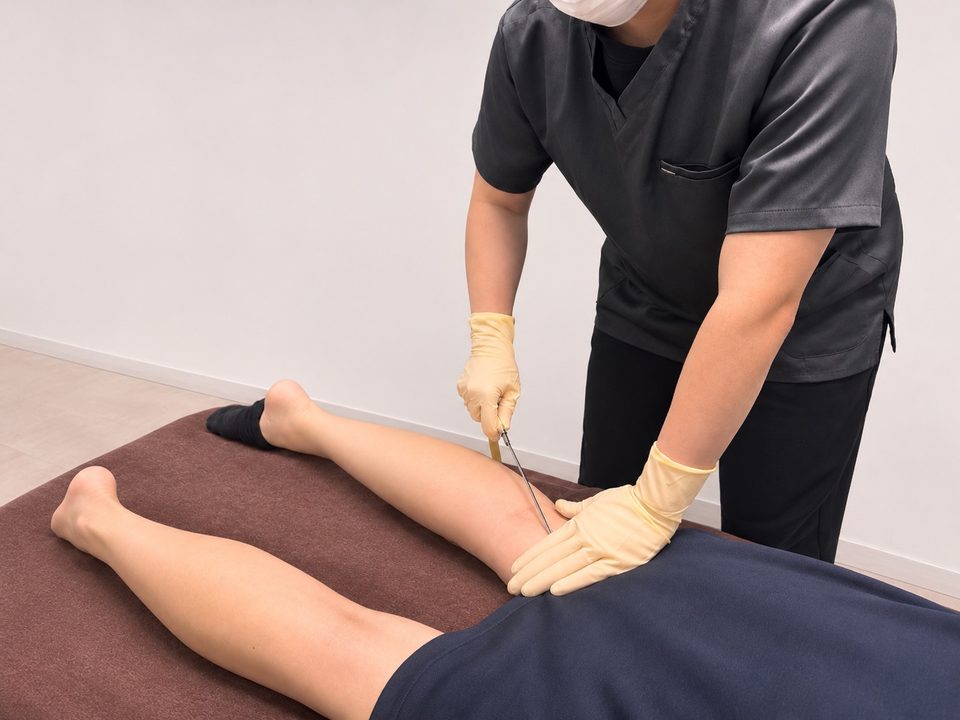 STEP 03
- Liposuction
Deep-layer fat is suctioned evenly through small incisions in inconspicuous places such as the groin, the crease under the buttocks, and behind the knees. When ELSA is used, fat is emulsified before suction.
 STEP 04
- Post-operative instructions
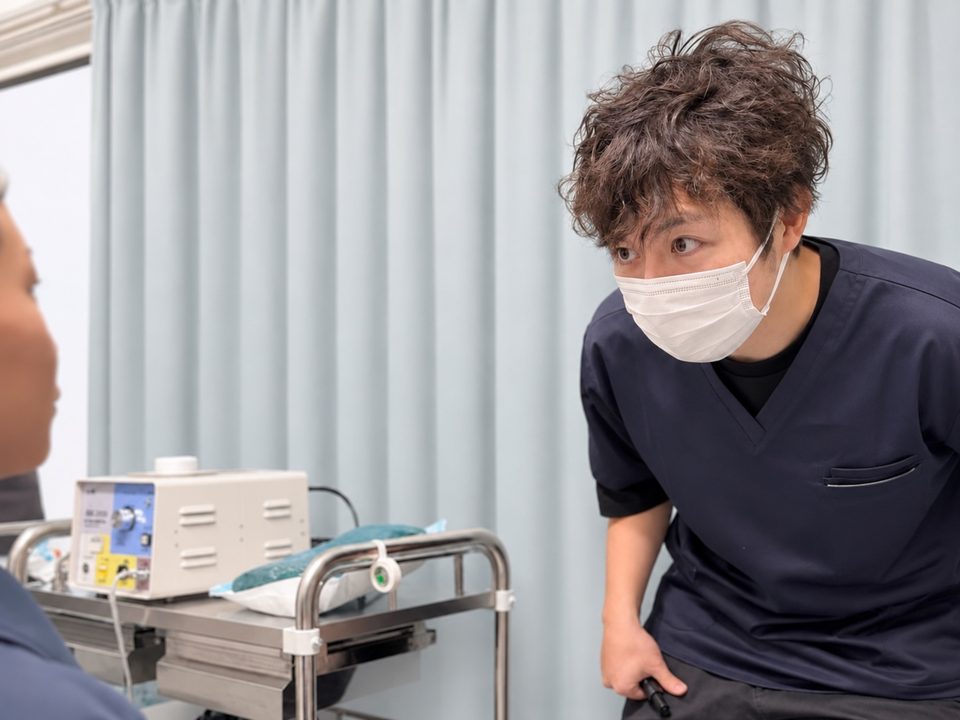
Our staff carefully explain the course of downtime, how long to wear the compression garment, and precautions for walking, bathing, and daily life.
 STEP 05
- Recovery
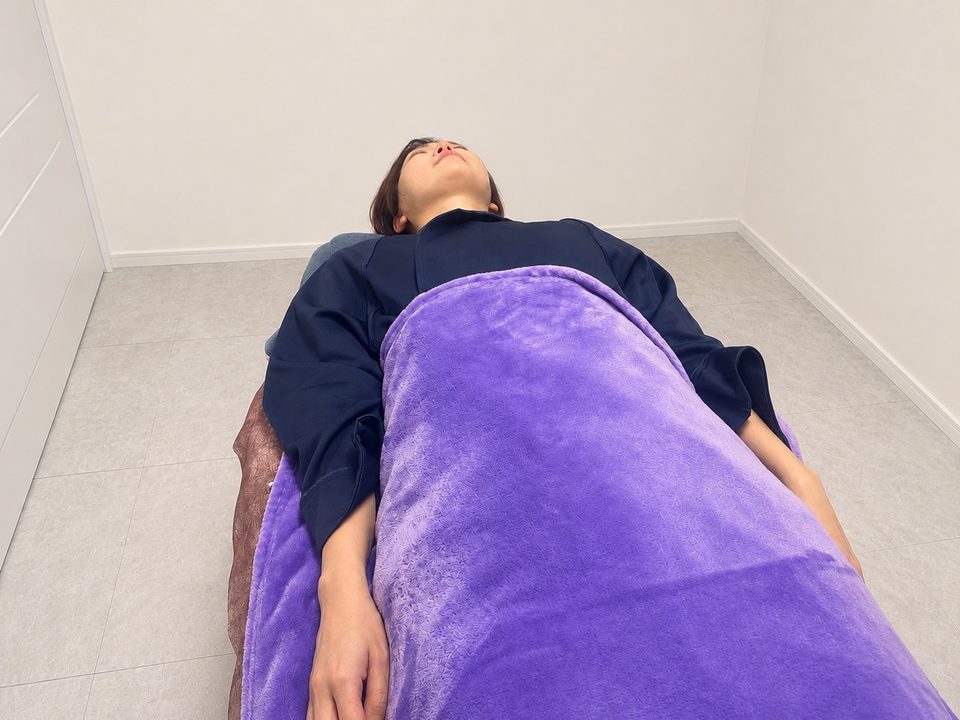
After treatment, you move to the recovery room, where staff watch over you until you wake from the anesthesia and feel settled.
 STEP 06
- Powder room
We guide you to the powder room to touch up your makeup. You can rest as long as you need.
A female staff member is present at your examination
Leg examinations involve showing your skin.
At Wing clinic, a female staff member is present with the doctor during examinations, so you can consult us with peace of mind.
AnesthesiaAbout anesthesia
Because leg liposuction covers a large area and takes longer, combining nitrous oxide sedation and IV sedation is required. Nitrous oxide first eases your nerves, then IV sedation puts you in a sleep-like state so you can be treated with less pain and tension.
-
01
- Nitrous oxide sedation (required)
-
You inhale an odorless gas that eases tension and anxiety. It is used before the IV sedation line is placed, reducing pain and tension from the needle.
- Takes effect 5 to 10 minutes after inhalation
- You can move smoothly from a conscious state to IV sedation
- If you have severe asthma, please consult us
-
02
- IV sedation (required)
-
Anesthetic is given through a vein, putting you in a sleep-like state during surgery. You are unlikely to remember pain or the procedure, so you can stay calm even during leg treatment covering a large area. It is performed carefully under ECG and blood-oxygen monitoring.
- Meals are allowed until 6 hours before surgery (water only until 2 hours before surgery, about one glass)
- You may not come by car or motorcycle
- We recommend someone pick you up
- We confirm you are awake and recovered after treatment
- On the day, avoid alcohol, strenuous exercise, and activities that require important decisions
[Who cannot have IV sedation]
- People with soy or egg allergies
- People who have had an allergic reaction to anesthetics in the past
Because IV sedation is required for leg liposuction, people in these groups cannot have this treatment. Be sure to tell us in advance.
AreasTwo treatment areas
Tap a card to switch to another angle.
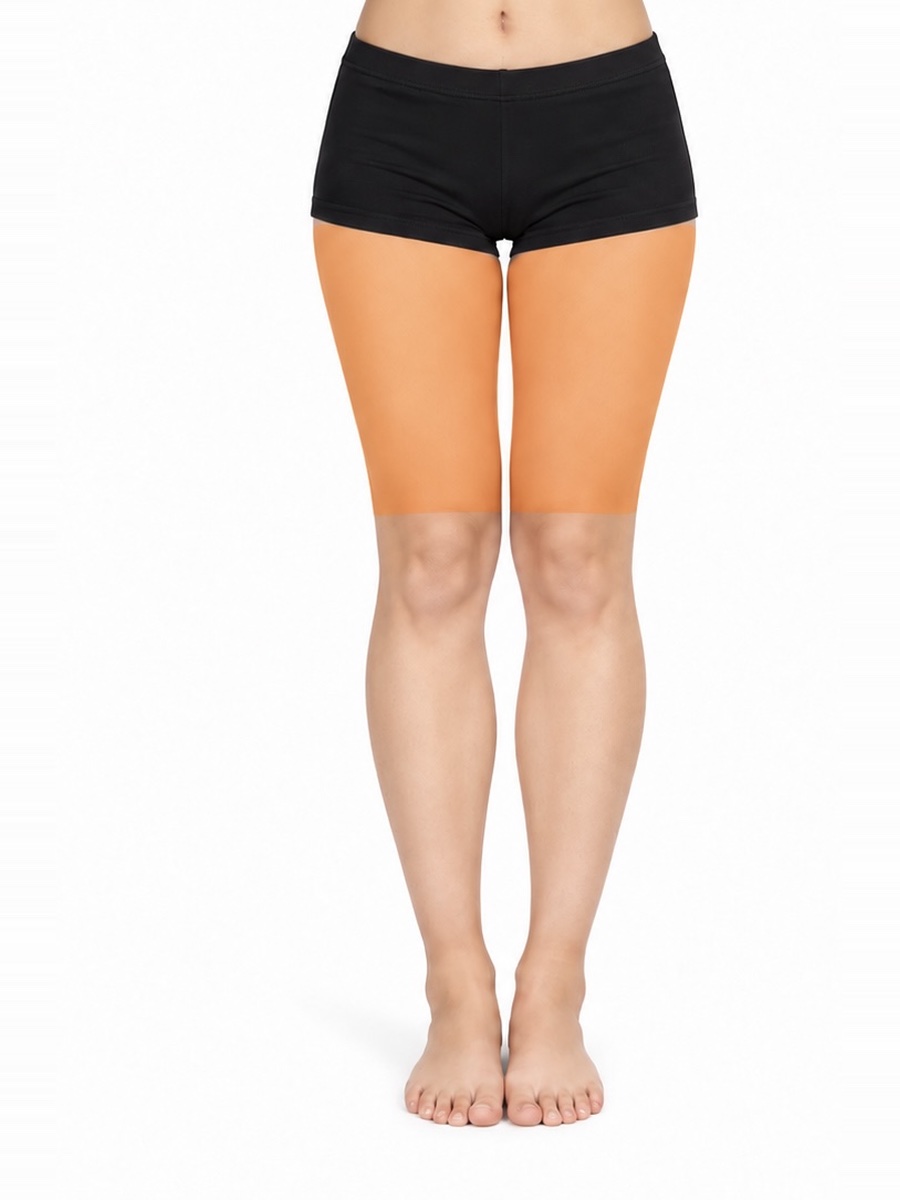
Legs (full thigh circumference)
The front, inner, outer, and back of the thigh are designed as one. We prevent steps on the inner thigh and drooping under the buttocks, refining a smooth line from the groin to above the knee.
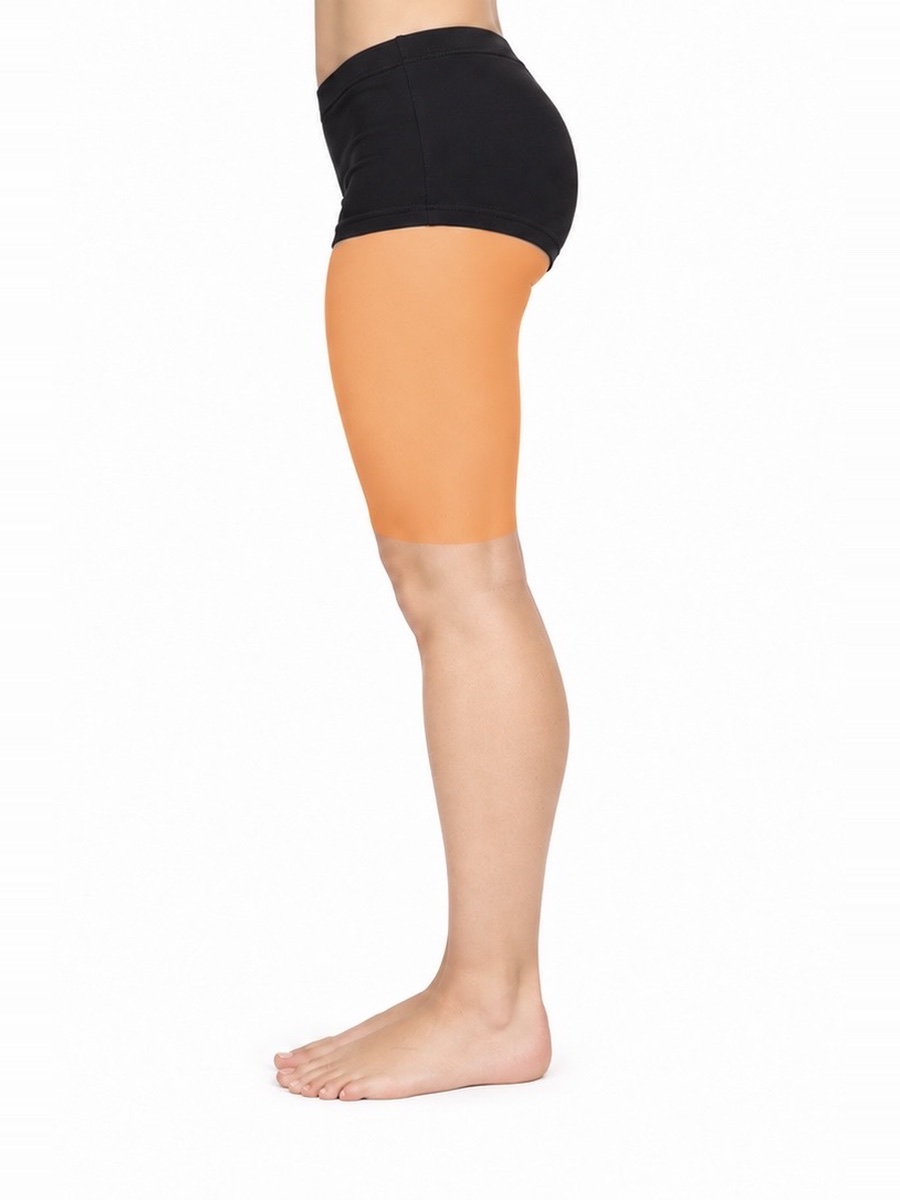
Legs (full thigh circumference)
The front, inner, outer, and back of the thigh are designed as one. We prevent steps on the inner thigh and drooping under the buttocks, refining a smooth line from the groin to above the knee.
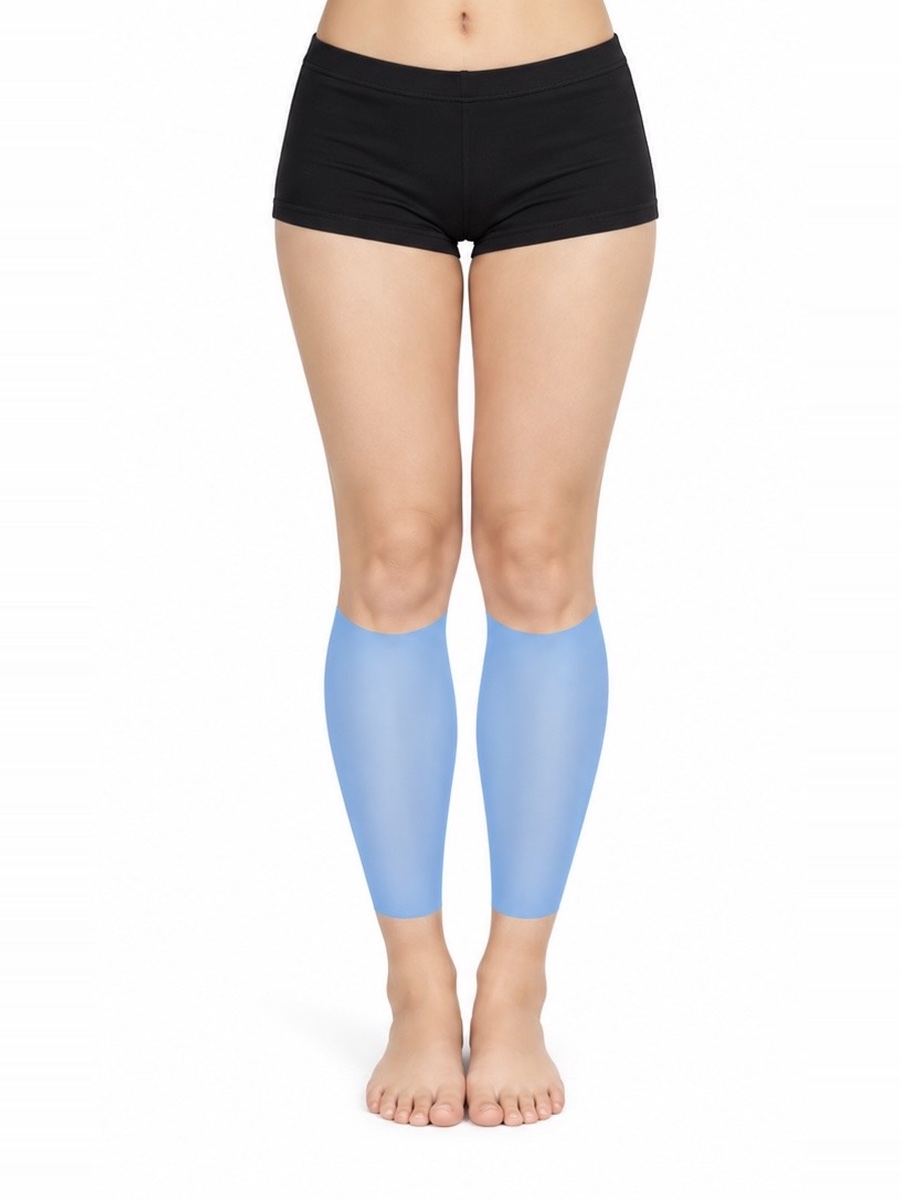
Calves
Reduces calf fat for slimmer lower legs. Because the fat layer is thin and irregularities appear easily, we design it not to over-remove. If muscle is the main cause, we suggest Botox.
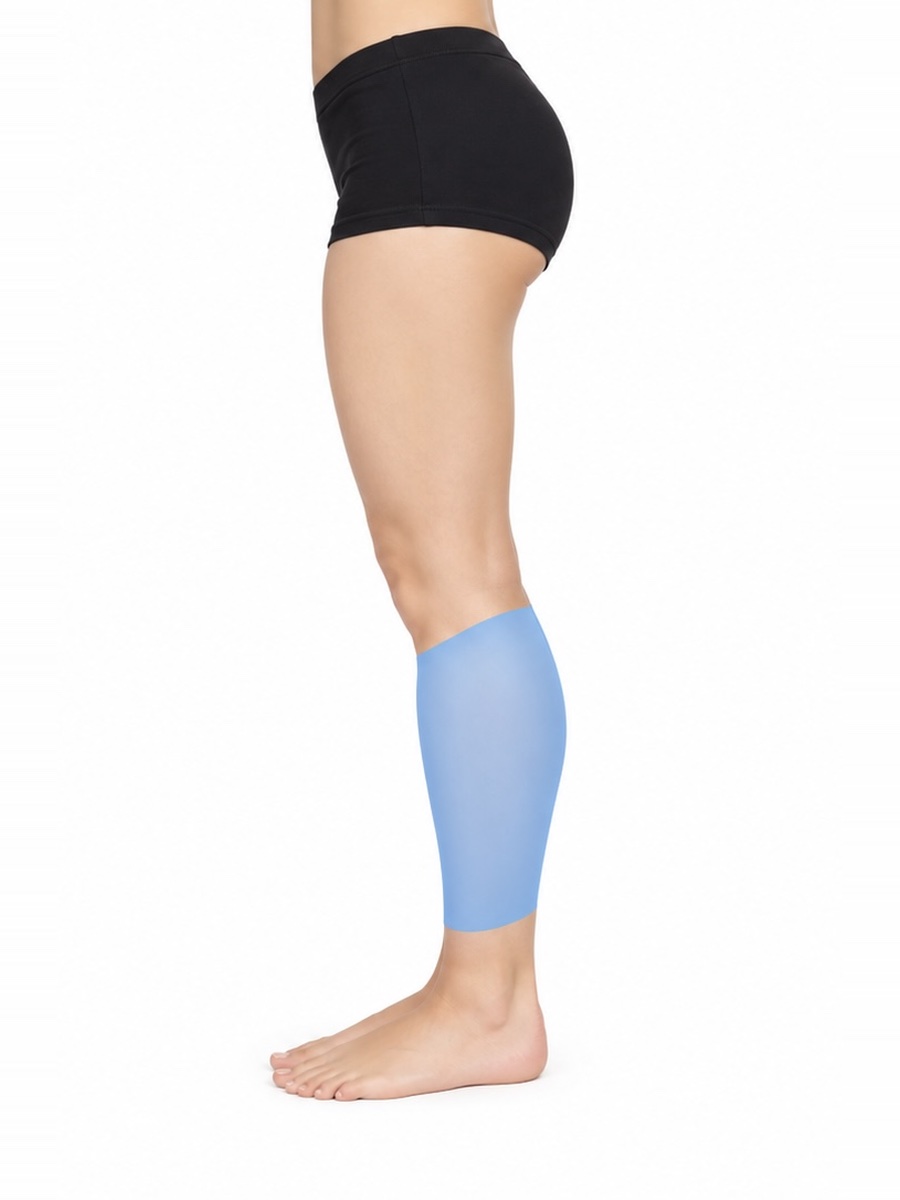
Calves
Calves: reducing fat here gives a slimmer look below the knee. The fat layer is thin and unevenness appears easily, so we design it so as not to remove too much.
* The calves are a separate area and can be treated on the same day as the thighs. Because the calf fat layer is thin and strongly affected by muscle, suitability is determined at your examination.
The fat removed is
used for fat grafting, not thrown away
The fat taken from your legs is your own body tissue—too valuable to throw away.
Fat collected by liposuction is normally discarded.
For patients considering leg liposuction, Wing clinic offers the option of "Wing Fat Grafting" on the same day, in which the fat is purified and transferred to areas of the face that lack volume.
If there are areas of your face that bother you, please talk to us before the fat is discarded.
Wing Fat GraftingFAT GRAFTING
Part of the fat collected during leg liposuction is centrifuged to remove impurities such as anesthetic fluid, blood, and damaged cells, and concentrated (condensed rich fat / CRF). It is then injected little by little with a thin cannula into the areas of the face that need it. Because it is your own tissue, there is little concern about allergies, and fat that takes can be expected to remain in place for a long time.
However, not all of the injected fat remains; the portion that does not take is absorbed within a few months. The doctor designs the amount and placement with this absorption in mind.
- You don’t need a separate suction session on another day to collect fat. The leg liposuction itself is the harvest.
- Fat that would normally be discarded is put to use as your own tissue.
- Fat is collected through the leg incisions, so no extra incisions are needed.
- Harvesting, purification, and injection are done in sequence during a single surgery.
- Nitrous oxide and IV sedation are needed only once.
Three ReasonsLiposuction and fat grafting: three reasons they work well together
The thighs are an easy area to harvest from
Fat on the thighs, especially the inner thighs, is soft and easy to collect in good quantity.
If you have leg liposuction, you get fat for your face without an extra harvest.
The fat removed is tissue that is uniquely yours
The fat removed is your own body tissue, unlike products such as hyaluronic acid.
Before it’s thrown away, we’ll think together about whether there’s somewhere it could be used.
For areas of your face that bother you, on the same day
Volume in the cheeks, temples, and under the eyes is lost with age and can make you look tired or severe.
Fat grafting on the same day as leg liposuction lets you address facial concerns at the same time. If there are areas of your face that bother you, we recommend considering both together.
AreasFacial areas that can be injected
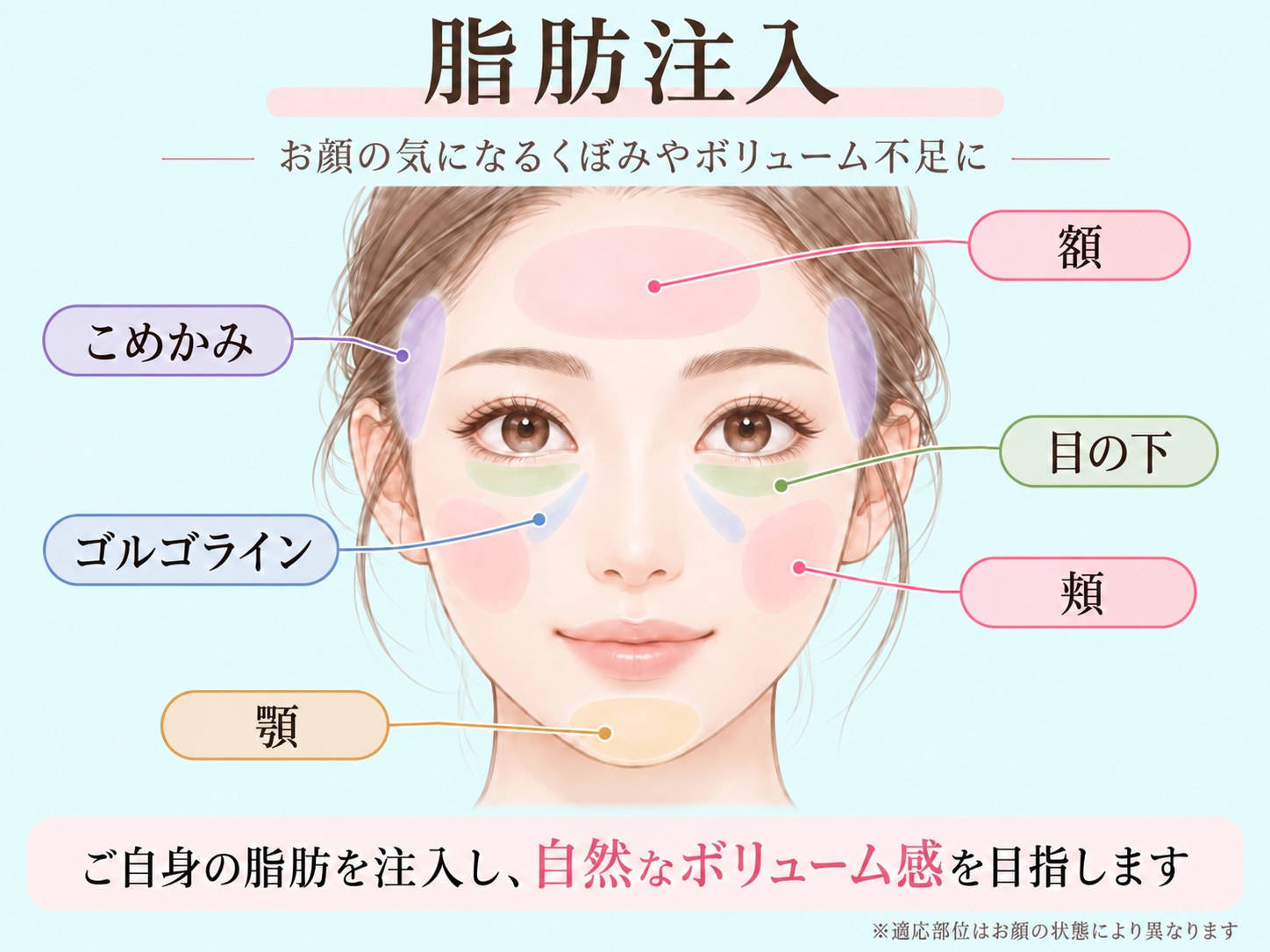
Forehead, temples, under the eyes, cheeks, nasolabial folds, chinFACE
Our fat grafting targets areas of the face that lack volume. The areas and amounts are decided after examining your bone structure, skin thickness, and asymmetry.
- Cheeks Fills hollows and restores cheek height for a softer look.
- Temples Fills hollows and smooths the contour from the outer eye to the jawline.
- Under the eyes Fills grooves under the eyes and the mid-cheek groove to lighten shadows. Can be combined with under-eye bag removal.
- Forehead Smooths flatness and irregularities.
- Nasolabial folds Softens shadows around the mouth for a youthful look. If sagging is the main cause, we may also consider a thread lift.
- Chin Adds volume to balance the profile and jawline.
* In areas where the skin is extremely thin or there are many blood vessels, we may inject less or suggest a different method.
Additional risks when combined with fat grafting
- Swelling and bruising at the injection sites (1 to 2 weeks)
- Insufficient effect or asymmetry because some of the injected fat is absorbed (may be adjusted with additional injection)
- Lumps, irregularities, or firmness (fat necrosis, oil cysts, calcification; most settle with observation, but we treat them if needed)
- Overcorrection, infection
- Extremely rarely, serious complications such as impaired blood flow to the skin, vision problems, or stroke caused by fat entering a blood vessel (we work to prevent this by injecting small amounts at low pressure with a blunt-tipped cannula)
* The rate at which fat takes varies by individual. Details are explained in the consent form.
CombinationTwo recommended combinations
Legs cover a large area, and firm, fibrous fat tends to build up on the outer thighs and around the knees. Combining treatments on the same day of surgery changes how smooth and firm the result is.
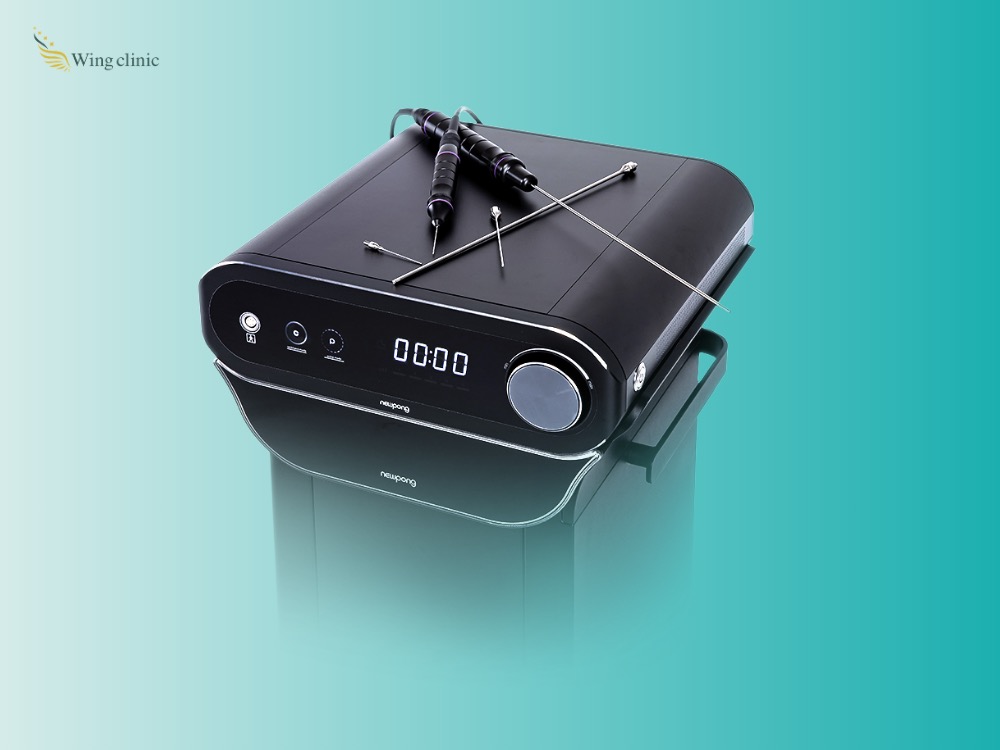 LSSA · ULTRASOUND
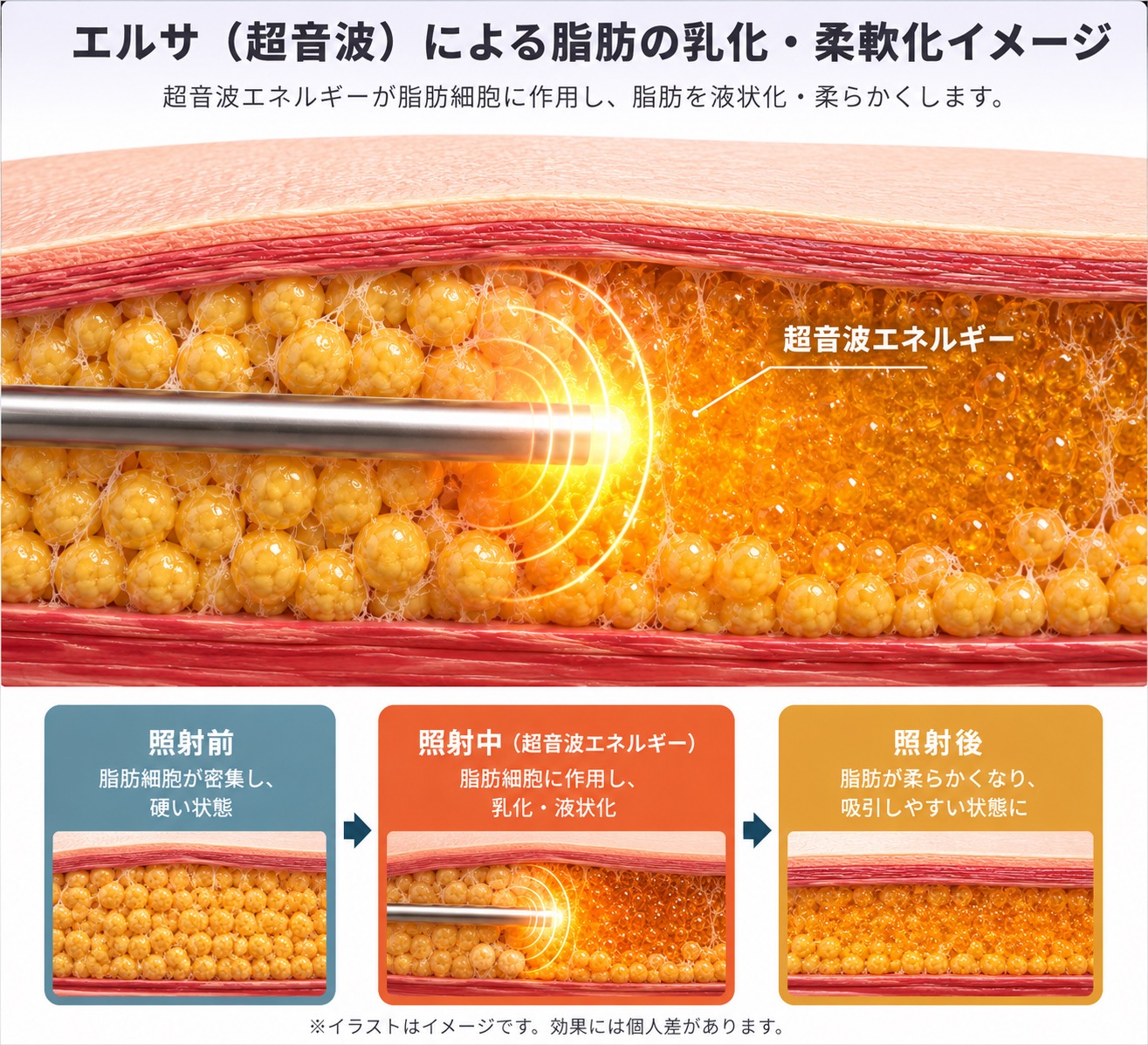
ELSALSSA
ELSA uses ultrasound to soften and emulsify fat before it is suctioned. Fat on the outer thighs, around the knees, and on the calves can be fibrous and firm, making it hard to remove evenly with a cannula alone. Combining ELSA allows even firm fat to be suctioned evenly, for a smooth finish with fewer surface irregularities even over large areas. Because it causes less damage to surrounding tissue, it can also reduce bruising and swelling.
- Even firm, fibrous fat on the outer thighs and around the knees is emulsified and removed evenly, preventing leftovers.
- A smooth finish with fewer surface irregularities (bumps), even over the large area of the legs.
- Less damage to surrounding tissue can reduce bruising and swelling, which also helps with bruising on the legs, where gravity pulls it down.
- Softens tissue that has hardened from past body-contouring treatments, making suction easier.
- Because fat is easier to remove fully in one session, it can help reduce the chance of needing another surgery.
- It is easier to control the amount removed on each side, for a natural balance.
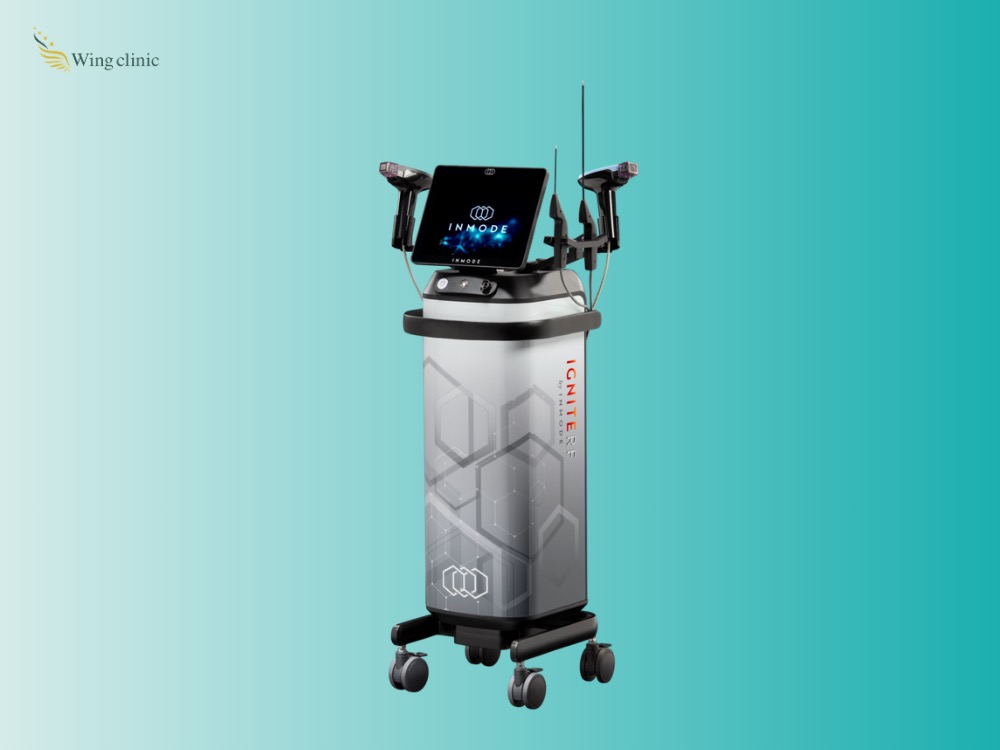 QUANTUM · RF
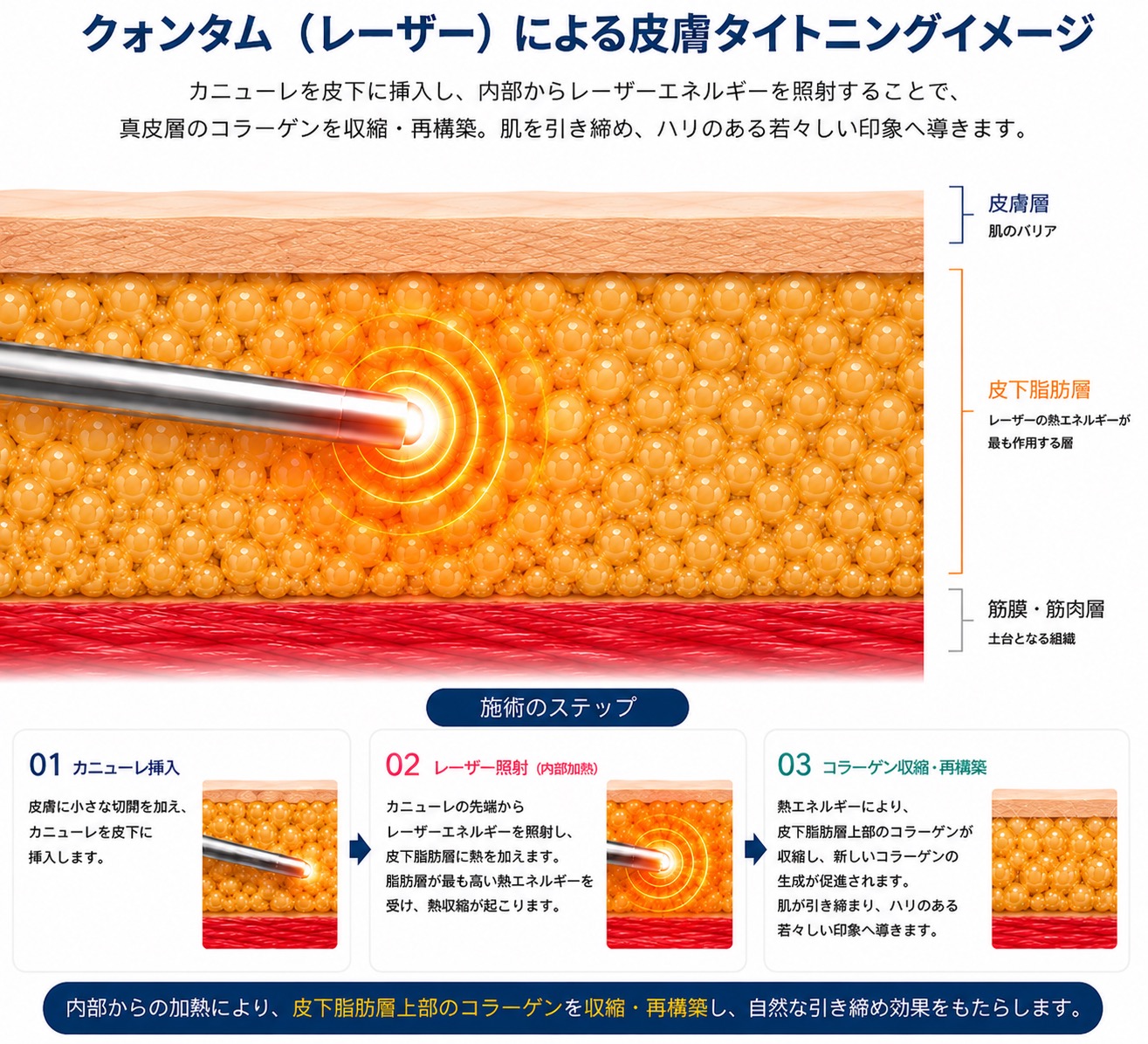
QuantumQUANTUM
Quantum uses radiofrequency (RF) to heat the deeper layers of the skin and tighten it from within. On the inner thighs and above the knees, skin tends to be left over once fat is reduced, and laxity can make legs look "slimmer but saggy." Combining Quantum with liposuction tightens the skin along the new line of the leg for a firm result.
- Tightens skin on the inner thighs and above the knees, which tends to loosen after suction, from within (skin tightening).
- Prevents leftover laxity above the knees, which often occurs with full-thigh liposuction, for neat knees.
- Even if your skin has lost some elasticity, the range of fat that can be removed widens.
- Heating stimulates regeneration of collagen and elastin, so results can be expected to last.
- Pairs well with ELSA, so you can aim for smoothness and tightening at the same time.
- Because it uses the same incisions, it is completed in one go without extra scars.
ComparisonHow it compares with other treatments
| Comparison | Liposuction (our clinic) | Fat-Dissolving Injections | Cryolipolysis | Botox (calves) |
|---|---|---|---|---|
| How it works | Physically removes fat cells | Dissolves fat with medication | Destroys fat by cooling | Slims by reducing muscle activity |
| Fat cells | Directly reduces their number | Destroys some | Destroys some | No change |
| Visible results | Easy to see results in one session | Several sessions needed | Several sessions needed | Results in a few weeks Ongoing treatment needed |
| Scars | Small incisions (3–5 mm) at the groin and behind the knees | None | None | None |
| Downtime | Yes (more significant) | Some swelling | Almost none | Almost none |
| Best for | A significant slimming | Small areas, small amounts | A mild change | Muscular calves |
ReasonsWing clinic — why patients choose us
- 01
- A philosophy of not over-removing
Removing too much from the legs makes irregularities, laxity above the knees, and drooping under the buttocks stand out. We assess even your skin’s elasticity, design "just the right amount," and aim for naturally toned legs.
- 02
- The same surgeon, from start to finish
The same doctor handles your examination, design, surgery, and aftercare. Because your doctor never changes, you share the same vision of your ideal leg line without any miscommunication.
* Your doctor may change depending on doctors’ schedules and how busy the clinic is.
- 03
- Fat, muscle, and bone assessed separately
We don’t assume fat is the only cause of heavy legs. We also check muscle development and bone structure such as bow legs or knock knees, and tell you honestly what liposuction can and cannot change.
- 04
- Anesthesia management and clear pricing
IV sedation is performed under monitoring. Prices are clearly presented during your consultation, so you can have treatment without worrying about extra costs.
Five PrinciplesFive things we protect when designing leg liposuction
- 01
- Don’t over-remove
Over-removal causes irregularities and sagging. We determine "just the right amount" taking skin elasticity into account.
- 02
- Protect the superficial layer
We leave the necessary thickness of fat just under the skin, keeping the surface smooth even on the inner thighs, where steps appear easily.
- 03
- Refine the transitions
We avoid creating steps between the thighs, knees, and calves, and keep the boundary under the buttocks, finishing one continuous line.
- 04
- Look while standingand walking
We check the design while you stand, stand on tiptoe, and from behind, and after surgery we also check how your legs look when you walk—for legs that look natural even when you sit.
- 05
- Design it together
"Co-design" with you, matching your ideal with what is medically appropriate. We take the time in consultation for you to feel fully satisfied.
CommitmentWing clinic ’s three commitments
Not just "how much to remove," but no shortcuts at any step.
What we value in the treatment room.
Scars kept as inconspicuous as possible
Incisions are made at places easily hidden by underwear and clothing, such as the groin, the crease below the buttocks, and behind the knee, only 3 to 5 mm in size. We finish carefully, through suturing and taping, so that the wounds blend in over time and become hard to notice even up close.
Stitches are removed after 1 week or so. In the unlikely event of hypertrophic scarring or pigmentation, we continue to respond with ointment, taping, and follow-up.
Safety checks
We don’t decide the amount to remove all at once. We check the appearance repeatedly, and the doctor assesses left-right balance and irregularities by eye and by touch.
Even over the large area of the legs, the amount removed is kept within an appropriate range for your body weight.
We never rush "just a little more"; preventing over-removal and asymmetry always comes first.
We don’t want you to have regrets 10 years from now
Removing more is not always better. Based on the cause of heavy legs and your skin elasticity, we propose only the amount you need. If we judge that bone structure or muscle is the main cause and liposuction would have limited effect, we will tell you clearly why and will never push it.
It’s fine if you can’t decide right away. We value giving you time to take it home and think it over.
DoctorOur Doctors
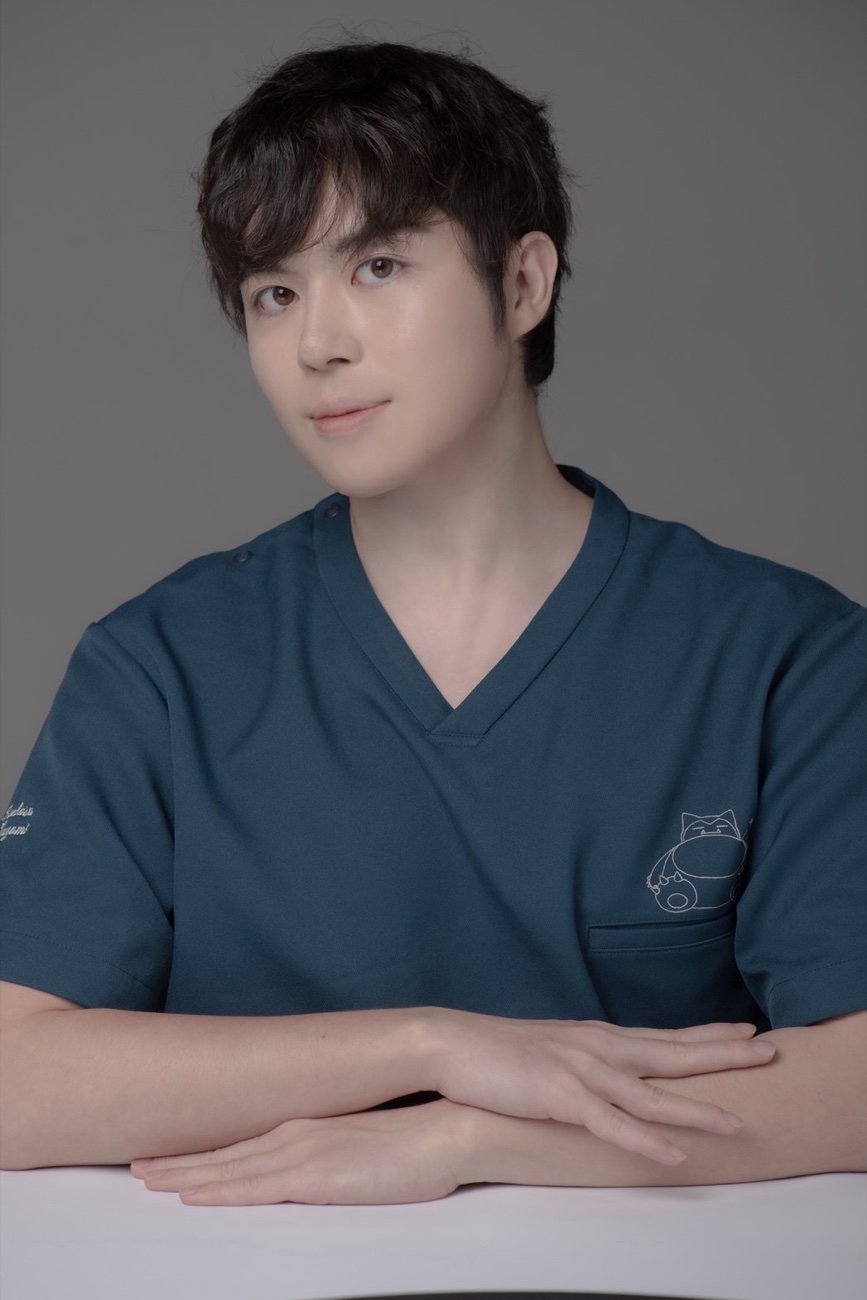
DirectorDr. Tsubasa Hayami, Clinic Director
A cosmetic surgeon who provides refined body contouring and facial slimming based on careful design and medical evidence. Focusing on liposuction of the face, upper arms, and legs, he designs treatment that doesn’t over-remove, with each patient’s bone structure and future in mind.
— Specialties: facial liposuction / upper arm and leg liposuction / slim-face design / facial contouring / injectables
- Graduated from Kanazawa Medical University
- Department of Ophthalmology, Juntendo University
- Director, Tennoji branch of a major cosmetic surgery clinic
- Wing clinic Toyonaka opens
- Botox Vista / Juvéderm Vista certified doctor
- Alma Tune Lifting certified physician
- Onda Lift Kansai training physician / Oligio Kiss certified physician
- Facial liposuction: 1,000+ cases (Apr 2023 – Oct 2026)
PricePrices
All prices include tax.
Model prices require that you agree to the use of case photos on social media, etc.
SINGLELiposuction by area
TIGHTENINGQuantum
FAT GRAFTINGFat grafting (face)
A method that processes fat even more finely for use in areas with thin skinRegular price (incl. tax)150,000 yenModel price (incl. tax)−
OPTIONOptions
* Model prices are for patients who agree to have their case photos published on social media, etc. Discount amounts and conditions are explained during your consultation.
* A compression garment is a required option for liposuction and Quantum (including Quantum on its own).
* Leg liposuction requires both nitrous oxide sedation and IV sedation(the IV sedation fee of 55,000 yen includes nitrous oxide sedation).
* If fat grafting is done on the same day as leg liposuction, fat is collected as part of the leg liposuction, so there is no fat harvesting fee.Injection areas and amounts will be quoted during your consultation.
* Quantum prices are for Quantum on its own. Estimates for combining it with liposuction are given during your consultation.
* Prices include: consultation (free) / post-operative follow-up (progress consultations and check-ups) / aftercare
* Medical loans and installment plans are available. We will simulate your monthly payments during your consultation, so feel free to ask.
* How results are felt varies by individual. Prices may vary depending on the examination and areas, so the final price will be presented after your consultation.
FlowOn the day of treatment
About half a day from arrival to going home. You can walk home the same day.
- 01approx.10 min
- Arrival and check-in
You will fill out a medical questionnaire. Because you will go home wearing a compression garment on your legs, we recommend loose clothing such as wide trousers or a long skirt, and shoes that are easy to slip on and off.
- 02approx.60 to 90 min
- Consultation
We check fat thickness, skin elasticity, and the influence of muscle and bone structure, and design together which areas to treat and how much to remove. We clearly explain prices and risks and proceed only once you are satisfied.
- 03approx.20 min
- Changing, design, and anesthesia
You change into a surgical gown and are marked while standing. The calves are also checked while you stand on tiptoe. You then receive nitrous oxide sedation followed by IV sedation, and treatment begins in a sleep-like state.
- 04approx.1–2 hours
- Liposuction
Fat is suctioned through small incisions in inconspicuous places such as the groin, the crease under the buttocks, and behind the knees. While checking asymmetry by touch, we shape a smooth leg line. If you wish, ELSA, Quantum, or fat grafting follow on the same day (fat grafting adds to the treatment time).
- 05approx.30 to 60 min
- Recovery and fitting the compression garment
You rest in the clinic while we check how you’re feeling and walking. We fit a leg compression garment to reduce swelling and bruising and explain how to care for yourself after surgery.
- 06Same-day discharge
- Going home and aftercare
You receive aftercare instructions and medicine and go home the same day.After surgery 2 to 3 days: swelling is strong, so rest with your legs raised as much as possible and avoid standing work and long walks. 1 week or so after surgery, you come in for stitch removal. After that, too, we continue to support you with consultations about your progress.
* Times are approximate and may vary depending on the day, so please allow plenty of time.
DowntimeDowntime timeline
Understanding the course of recovery helps you make a choice without worry. Because the area treated on the legs is large and also affected by gravity, the legs are an area where downtime tends to be heavier than for other areas and treatments. Please plan your work and schedule with plenty of leeway. Recovery changes as shown in the graph below.
* This course does not apply equally to everyone.
Guide to swelling and puffiness (relative image, with the post-surgery peak as 100)
Wear compression all day
Avoid standing work
Bruising moves below the knees
usually settle
Firmness and tightness peak
and the line settles
Final result
★ Swelling and bruising last about 2 to 3 weeks as a guide. For when you can walk and return to work, see “Compression garment and guide to returning to daily life” below.
-
- Inflammatory phaseDAYS 1–7
This is the period when swelling and bruising appear. Swelling and pain peak at 2 to 3 days after surgery, and the legs swell considerably. During this time, avoid standing work and long walks and rest with your legs raised. Wear the compression garment all day for about the first 3 days after surgery (except when bathing), then continue mainly during the daytime. Pain is controlled with painkillers. To prevent blood clots, take short walks indoors frequently. 1 week or so after surgery, stitches are removed.
-
- Recovery phaseWEEK 2–3
Swelling goes down considerably, and bruising moves down to below the knees and ankles with gravity, turning yellow as it fades. Swelling on the tops of the feet and ankles may last a little longer. Continue wearing the compression garment for the period your doctor instructs.
-
- Contracture phaseMONTHS 1–3
As the skin tightens from within, lumpiness, firmness, and tightness peak. Your knees may be hard to bend, and the surface may temporarily look uneven. This is when people tend to worry most, but it is a normal stage that most people go through.
-
- Maturation phaseMONTH 3–6
Contracture settles and the final leg line is established. Firmness softens into toned legs that flow continuously from the thighs to the calves. Scars blend into the skin, and this is when you can see the finished result.
RecoveryCompression garments and returning to daily life
-
- Compression garmentDAYS 0–3
After surgery 3 days or so, except when bathing, wearing it all day is the basic rule. This is the most important period for reducing swelling and bruising and setting the skin to its new line.
-
- Compression garmentWEEK 1–4
After that, it is worn mainly during the daytime for 3 to 4 weeks or so as a guide. The doctor advises on how long to wear it based on the area suctioned and your progress.
-
- Walking and workGuide
Short walks are possible from the same day. As a guide, return to desk work after 3 days to 1 week, standing work after 1 to 2 weeks, and physical work after about 1 month.
-
- Bathing, exercise, and heelsGuide
Showers from around the next day, as instructed by the doctor (without wetting the wounds); baths after stitch removal. Light exercise from 2 weeks onward, and full exercise from 1 month onward. Heels can be worn once swelling goes down, from about 2 weeks onward.
* The course, duration, and degree vary by individual. They also vary with the amount and area of suction and with combinations such as ELSA and Quantum. Please contact us at any time about symptoms that concern you.
RiskRisks and how we handle them
Every treatment carries risks. Most can be reduced or managed with understanding beforehand and appropriate care.
- 01
- Swelling and bruising
After surgery 2 to 3 weeks or so: a physiological reaction. On the legs, gravity may move bruising down below the knee. Wearing the compression garment reduces it.
- 02
- Contracture and lumps
1 to 3 months after surgery, firmness and tightness may appear, gradually settling within 3 to 6 months.
- 03
- Irregularities and asymmetry
Caused by over-removal or pre-existing asymmetry. Prevented by a design that leaves the superficial layer and by checking by touch during surgery.
- 04
- Skin sagging
In people with reduced elasticity, it may appear above the knees or on the inner thighs. We aim to prevent it by combining Quantum.
- 05
- Reduced sensation (temporary)
Temporary irritation of subcutaneous nerves. Most recover naturally within a few months.
- 06
- Hematoma and seroma
A collection of blood or fluid. Wearing a compression garment is especially important on the large area of the legs. If fluid collects, we treat it as needed.
- 07
- Scars and pigmentation
Most become inconspicuous within a few months. Sun protection and taping are important.
- 08
- Infection, blood clots, anesthesia-related (extremely rare)
Managed with sterile technique and preventive antibiotics, light walking soon after surgery, anesthesia management under monitoring, and a review of your medical history.
Who cannot have this treatment
- People who are pregnant or breastfeeding
- People with serious chronic illness or who take anticoagulants
- People with serious heart disease, diabetes, or systemic muscle disease
- People with inflammation or wounds in the treatment area
- People who have had or plan to have a vaccination within 2 weeks
- People with soy or egg allergies (because IV sedation cannot be used)
Precautions
- If you have had a cosmetic treatment at another clinic within the past month, please tell us in advance.
- If you have ever had an allergic reaction to anesthetics or medication, please tell us in advance.
- If you take blood thinners (such as anticoagulants), the risk of bruising may be higher.
FAQFAQ
QCan I walk home after surgery? When can I return to standing work?
Walking short distances is possible from the same day, and you can walk home by yourself. However, the legs swell considerably for the first 2 to 3 days after surgery, so during this time avoid standing work and long walks and rest with your legs raised. Many people return to desk work after 3 days to 1 week and to standing work after 1 to 2 weeks as a guide, and the doctor advises according to your progress.
QWhere will the scars be, and how noticeable will they be?
Incisions are made at places easily hidden by underwear and clothing: the groin or the crease below the buttocks for the thighs, and for the Calves behind the knee. They are small, 3 to 5 mm or so. Stitches are removed after 1 week or so. Scars blend into the skin over time, but to prevent pigmentation we recommend UV protection and taping.
QHow long do I wear the compression garment?
After surgery 3 days or so, it is worn all day except when bathing. After that 3 to 4 weeks or so (mainly during the day) as a guide. It is needed to reduce swelling and bruising and help the skin settle into its new line (compression garment: 16,500 yen). The period varies with the area suctioned and your progress, so the doctor will advise you.
QCan I have just part of the thigh treated, such as only the inner thighs?
Our standard approach is "Legs (full thigh circumference)," in which the front, inner, outer, and back of the thigh are designed as one. Slimming just one part, such as the inner thighs, tends to create steps at the boundary and throw off the balance of the whole leg. The calves are treated as a separate area and can be done on the same day as the thighs. We will propose the areas to treat after checking your fat distribution at your examination.
QCalves: is the bulk fat or muscle?
The part that bulges firmly when you stand on tiptoe is muscle, and the part you can pinch when relaxed is subcutaneous fat. The calves often have a high proportion of muscle and a thin fat layer, so we suggest liposuction if fat is the main cause, Botox injections if muscle is the main cause, or both if it’s both. We will tell you after assessing it at your examination.
QIf my legs look heavy because of bow legs or knock knees, can liposuction slim them?
Liposuction cannot change bone structure itself. However, if fat sits on top of a bony prominence, reducing that fat can improve how it looks. On the other hand, forcing suction where bone structure is the main cause can create hollows, so at your examination we tell you honestly what can and cannot be changed.
QWill the fat come back?
Liposuction reduces the number of fat cells, so fat is less likely to build up in the same area. However, with significant weight gain the remaining cells can enlarge and fat can build up in untreated areas, so keeping up healthy habits is important.
QWhen can I go back to heels, exercise, and bathing?
Showers from around the next day, as instructed by the doctor (without wetting the wounds); baths after stitch removal as a guide. Light exercise such as walking from 2 weeks onward; full exercise such as running and strength training from 1 month onward. We recommend heels from about 2 weeks, once swelling and puffiness have settled.
QHow long does swelling in the ankles and tops of the feet last?
Because of gravity, swelling and bruising on the legs tend to move down below the knee, to the ankles, and to the tops of the feet. Most settle in 2 to 3 weeks, but puffiness may remain for several months. Wearing the compression garment, resting with your legs raised, and avoiding standing for long periods can be expected to reduce it.
QDo I need ELSA or Quantum?
They aren’t required. We suggest ELSA if you want to reduce firm fat and irregularities on the outer thighs or around the knees, and Quantum if skin laxity on the inner thighs or above the knees is expected after suction. We explain whether they are needed during your consultation.
QCan I have fat grafting to the face on the same day as leg liposuction?
Yes. Part of the fat harvested by leg liposuction is purified by centrifugation (CRF) and injected into areas that need it, such as the cheeks, temples, under the eyes, and forehead. There is no need for a separate liposuction session to harvest fat. However, treatment time is longer by the time for fat injection, and to the leg swelling, bruising, and puffiness is added facial swelling and bruising (about 1 to 2 weeks). Doing them together does not make downtime lighter, so please consult us at your consultation, including whether you can secure time to rest.
QHow much of the injected fat remains? Can it form lumps?
Some of the injected fat is absorbed within a few months, and the portion that takes remains afterwards. Because the proportion that remains (the take rate) varies greatly from person to person, the doctor designs the amount injected with absorption in mind. The amount that remains is mostly set at about 3 months after surgery, and if there is not enough, additional injection is considered at that point. Lumps or asymmetry occasionally occur, but most settle with observation.
Contact us Booking & Inquiries
You can also book or ask questions via LINE!
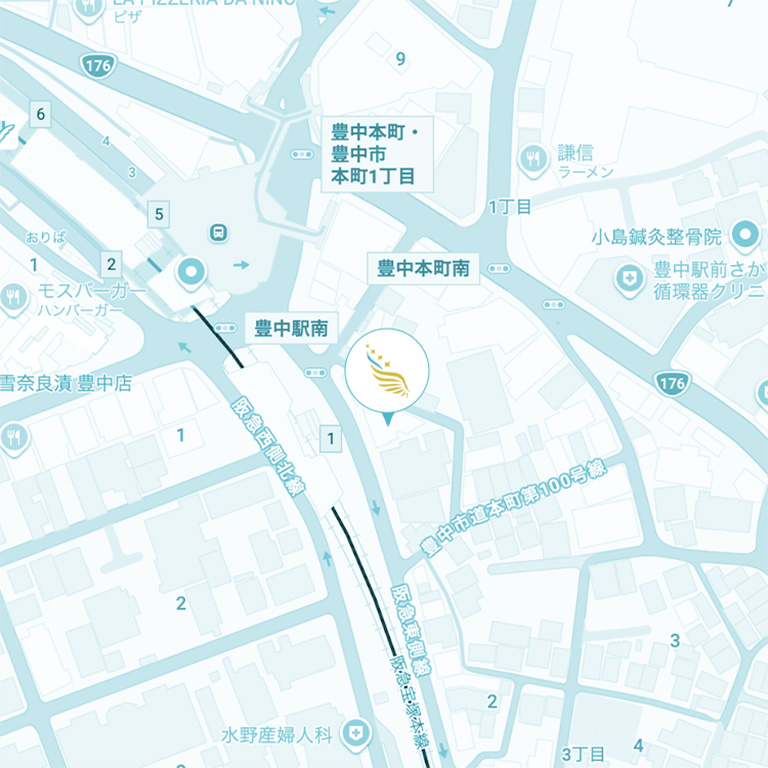
Access
View on a larger map4F Toyonaka Ekimae Yasuda Building, 1-2-35 Honmachi, Toyonaka, Osaka
- 1 minute walk from Hankyu Toyonaka Station / 11 minutes by train from Umeda Station
- 15 minutes from Itami Airport / 15 minutes from Shin-Osaka Station
Hours
10:00–20:00 (last entry 19:00)
Closed: irregular *For more information, please contact us.
Departments: Cosmetic Dermatology, Cosmetic Surgery, Internal Medicine, Dermatology