
1 minute from Toyonaka Station
Less pain, toward skin that needs no shaving.
OsakaWing Medical Hair Removal
Medical hair removal in which the doctor examines your skin tone, hair thickness, and how each area responds, then sets the output and intervals of a heat-accumulation device. If a reaction such as a burn or paradoxical hair growth occurs, a doctor at the same clinic examines and treats it.— What Wing clinic values:“beauty in moderation.”
Wing clinicToyonaka
Booking & Inquiries 06-6318-8774 Call
[Hours] 10:00-20:00 / Last entry 19:00
Medical hair removal
tailored to each person,starting with a doctor’s examination.
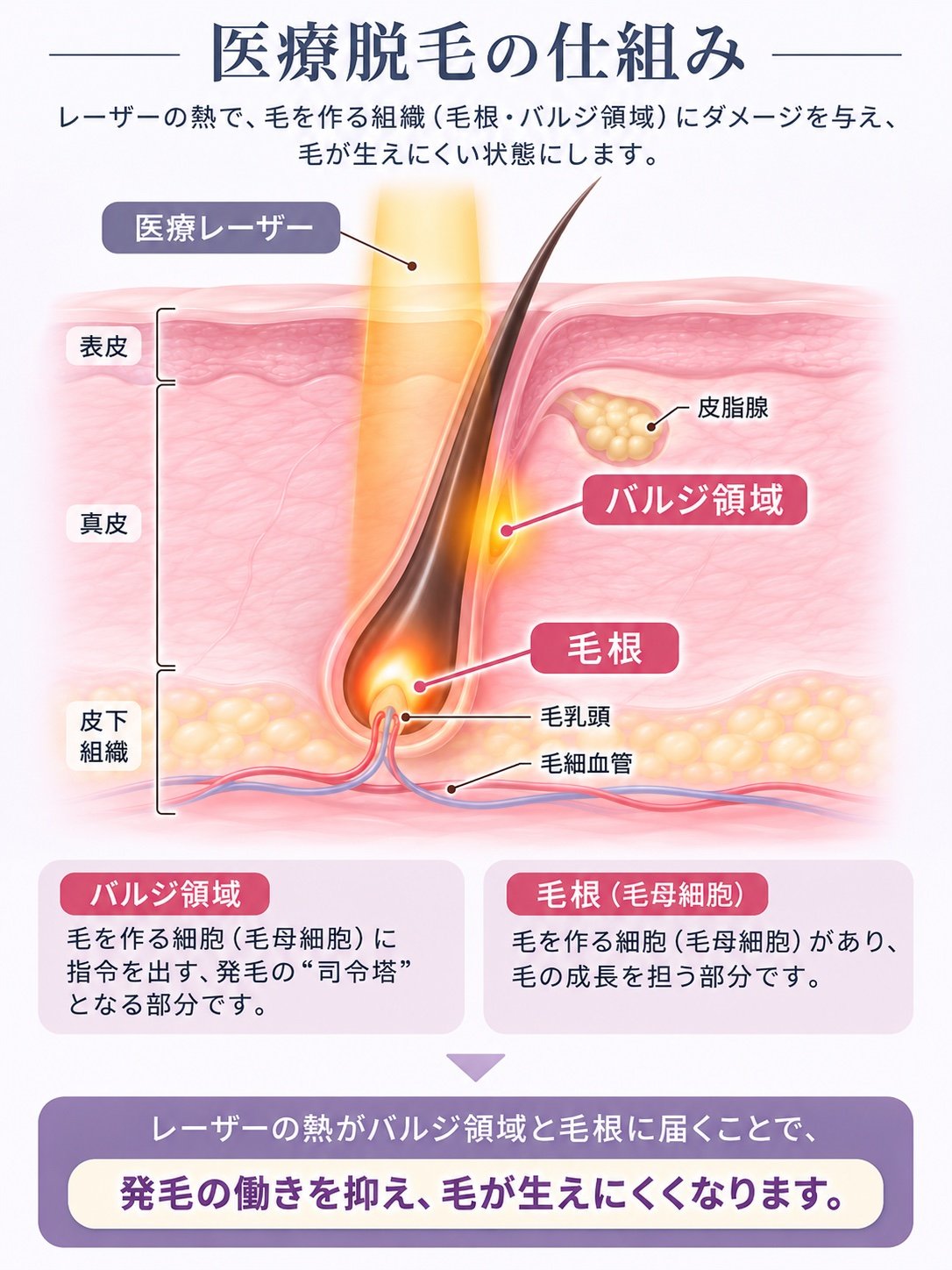
Medical hair removal is a “medical procedure” that applies heat to the tissue that makes hair, weakening its activity.
Treating the whole body evenly at the same output might reduce hair. But depending on skin tone, hair thickness, and area, the same light produces completely different reactions.
Wing clinic offers medical hair removal that starts with the doctor examining your skin and hair before treatment and setting the output and intervals for each person. We plan not only for results but also for possible reactions such as burns and paradoxical hair growth. We believe that is what it means to offer hair removal as a cosmetic surgery and cosmetic dermatology clinic. It is also why we chose the “heat-accumulation” method, which reduces hair while keeping the burden on the skin and pain low.
And we do not do hair removal by volume. We take time to treat each person carefully, with prices and a system that make it easy to keep coming. That is what hair removal at Wing clinic is about.
Contents
Tap to jump to a section
PricePrices
All prices include tax. There are no first-visit, follow-up, or consultation fees.
DISCOUNT3 discounts that can be combined
- Weekday price
Regular price10%off
- Visits Monday to Friday (excluding public holidays)
- No time-of-day conditions
- Course of 5
Plus10%off
- Single-session price × 5 × 0.9
- An extra 10% off the weekday price too
- From the 5th visit: repeat discount
Plus10%off
- For those who have had 5 or more treatments at our clinic (including treatments other than hair removal)
- An extra 10% off the per-session price of the course of 5
- Can be combined with the weekday price
- First-visit and follow-up feesIncluding consultations and follow-up visits
- Always0 yen
WOMENFemale
Face
Upper body
Arms
Legs
VIO
Full-body sets
Area sets
MENMen
Beard
Upper body
Set plans
- For men, we offer only beard and upper-body areas. We do not offer full-body, VIO, or lower-body (legs, etc.) hair removal.
OPTIONOptions
- An option’s “1 area” means one row of the per-area menu in the price list (e.g., both underarms, V-line, forearms, and beard 3 areas each count as 1 area). Set menus are counted by the number of per-area menus they include (e.g., VIO = 3 areas, whole arms = 2 areas).
- Before your visit, please shave the areas to be treated (with an electric shaver). Staff will shave any missed spots on the day (1,100 yen per area). For details, see Shaving before treatment.
- The coverage of each area is listed under the menu name. For areas where the boundary is unclear, the doctor will check with you at the examination.
- Set menus cost less than adding up the per-area prices.
- “From 5th visit” is the price for those who have had 5 or more treatments at our clinic (including treatments other than hair removal). It is a further 10% off the per-session price of the course of 5, and applies to pay-per-session treatments and to additional sessions after a course of 5.
- Course-of-5 prices are shown per session. The total payment is 5 times the per-session price. Amounts under 10 yen are rounded down.
- Weekday prices apply to visits Monday to Friday (excluding public holidays). The weekday price for the course of 5 applies when all 5 visits are on weekdays.
- Medical loans and various installment plans are available. We will simulate your monthly payments at your consultation.
- For prices of treatments other than hair removal, see the price list page.
- Results vary from person to person. Prices may change depending on the examination and areas, so the final price is presented after your consultation.
AreasTreatment area
Women: 24 areas + sets. Men: beard and upper body. Areas are divided the same way as in the price list。
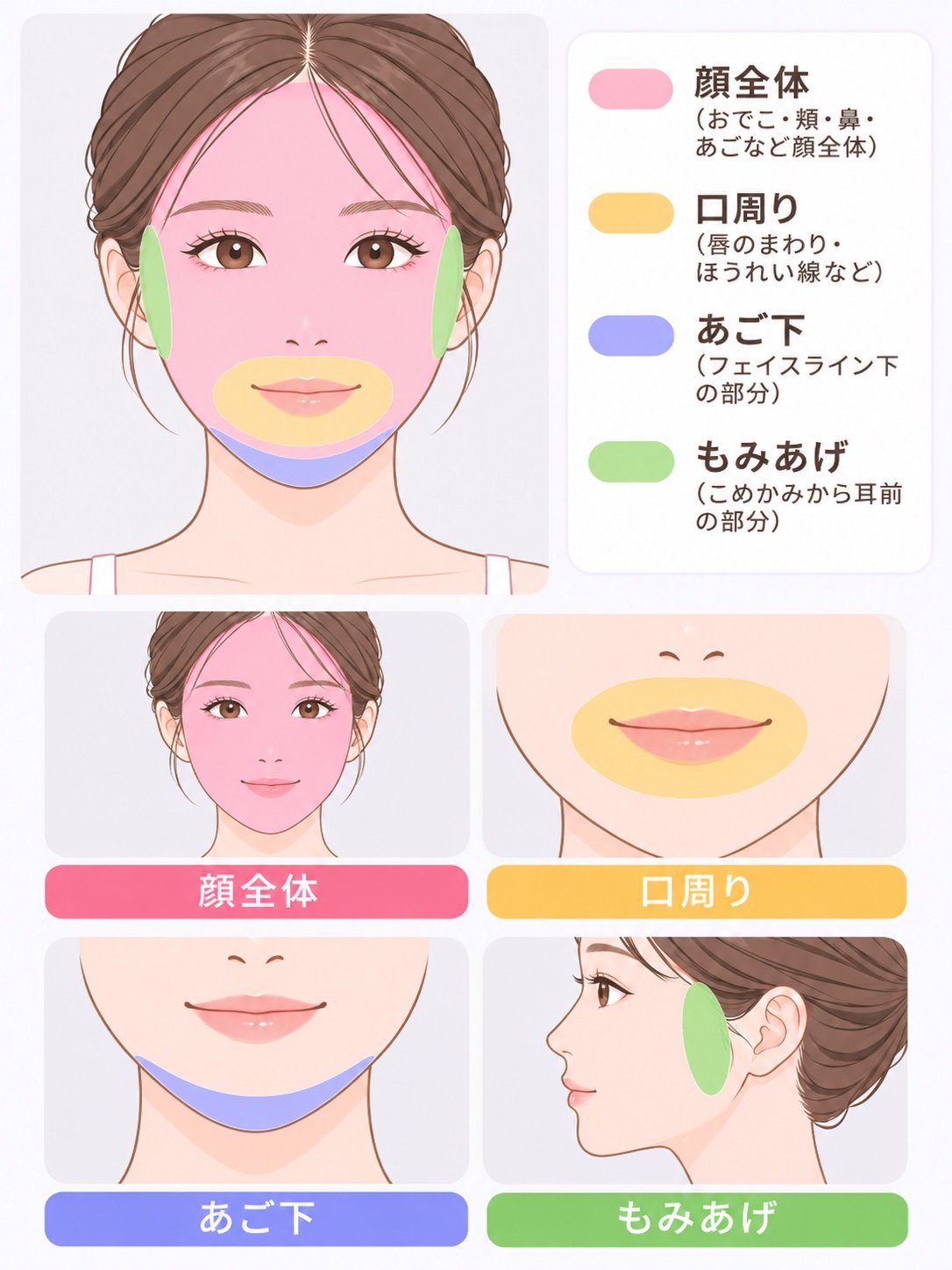
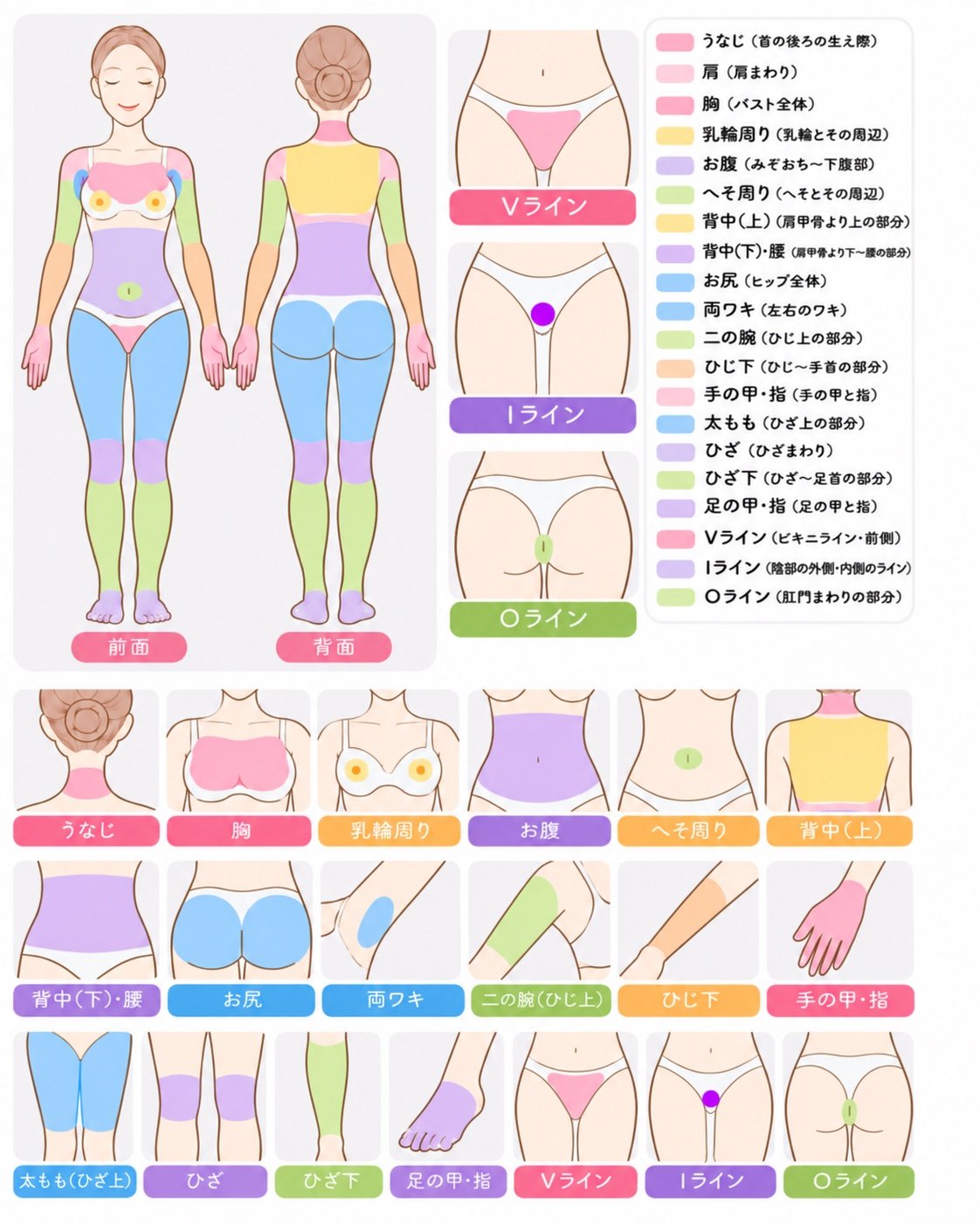
- For men, we offer only beard and upper-body areas (see the price list for the areas). For areas where the boundary is unclear, the doctor will check with you at the examination.
SessionsGuide to sessions and time needed
Medical hair removal is not finished in one session. Hair grows in a “hair cycle” of growth, regression, and resting phases (about a 2-month cycle), and only hair in the growth phase is fully grown at the surface. Our heat-accumulation device is less affected by the hair cycle, so you can come about once a month, but how many sessions you need still depends on how far you want to reduce your hair (your goal) and the conditions of your hair, skin, and area. We give guidance based on 2 goals.
Easier shaving6 sessions
The amount of hair visibly decreases, and hair that grows back is finer, like “vellus hair.” Many people go from shaving “every day or every other day” to “once a week to a few times a month,” and quite a few are satisfied at this stage for the underarms, arms, and legs.
- Guide to duration:About 6 months (about once a month)
- Course of 5 + 3 sessions at the “from 5th visit” price is a guide
- Fine vellus hair remains
Aiming for smooth skin10 sessions+
Thick hair almost stops growing, and the remaining fine hair is reduced too, aiming for “smooth skin” that needs almost no shaving. “Thinner is fine” and “smooth” differ by nearly twice the number of sessions, so it is important to decide your goal first.
- Guide to duration:About 1 year to 1 year 3 months (about once a month)
- After a course of 5, you can add as many sessions as you need, paid per session, at the “from 5th visit” price.
- Areas with dense hair, such as VIO, both underarms, and men’s beards, may take a little longer
By AreaSessions, pace, and duration by area
| Area | Easier shaving (to vellus-like hair) | Aiming for smooth skin | Pace | Guide to duration |
|---|---|---|---|---|
| Face, arms, legs, back, abdomen, etc. | 6 sessions | 10+ sessions | about once a month | About 6 months / about 1 year |
| VIO, both underarms, men’s beards (dense-hair areas) | 6–8 sessions May take a few more sessions | 10–12 sessions May take a few more sessions | about once a month | May take more than 1 year |
- All figures are guides and vary with hair amount, hair type, skin tone, and hormonal state. We do not promise that treatment will “definitely finish in X sessions.”
- The guide pace is about once a month. Coming more often does not improve results.
- Because of differences in the hair cycle, hair may temporarily grow back in patches. This is not necessarily due to missed spots.
- As hair decreases, fine, lightly pigmented hair may remain.
FACTORS4 factors that change the number of sessions
- 01
- How far you want to reduce your hair (your goal)
Your goal affects the number of sessions most. “Just make shaving easier” takes about 8 sessions, while “smooth” takes 12–15, nearly double. At your consultation, we first ask you to put your goal into words, then suggest a number of sessions to match.
- 02
- Hair thickness, amount, and color
Thick, dark hair gathers light easily and responds well each session, but the more hairs there are, the more sessions are needed. Fine, light vellus hair gathers heat less easily, so even the same area takes more sessions. White and blond hair does not respond.
- 03
- Skin tone and hair removal history
For darker or tanned skin, we treat at a lower output to avoid burns, so more sessions may be needed. If you have had hair removal at another clinic or salon, the estimate depends on which method you had and how many times. Please tell us at the examination.
- 04
- Hormones, sex, and age
The beard, chest, and abdomen, which are affected by male hormones, have thick, dense hair and take more sessions. Puberty, pregnancy and childbirth, or changes in hormonal balance can also cause new hair to grow after hair removal.
ProgressChanges as sessions add up(heat-accumulation)
- Sessions 1–2
- Changes are still small
Treated hair keeps growing for a while, then falls out gradually over 2–3 weeks. Unlike heat-destruction methods, hair does not all fall out at once, and visible changes are still small at this stage. Because of the hair cycle, hair may also look patchy.
- Sessions 3–5
- Longer between shaves
Less hair grows back, and you start to shave less often. As hair gets finer, roughness and dark dots after shaving become less noticeable, and it is easier to feel that “it’s working.”
- Sessions 6–8
- Easier shaving
Thick hair becomes sparse, and hair that grows back is fine, like “vellus hair.” This is the “easier shaving” goal. Based on your hair, we discuss at the examination whether to stop here or continue toward smooth skin.
- Sessions 9–15
- Aiming for smooth skin
This is the stage of reducing the remaining fine hair. Continuing about once a month, we aim for smooth skin in about a year. Dense-hair areas such as VIO, both underarms, and men’s beards may take a few more sessions.
- If you want to try it first: 1 session, paid per session. You can decide whether to continue after a test shot and seeing your first reaction.
- If you want “easier shaving” (8 sessions): A course of 5 (single-session price × 5 × 0.9), then 3 more sessions at the “from 5th visit” price (a further 10% off), as a guide.
- If you are aiming for “smooth” (10–15 sessions): After a course of 5, continue for as many sessions as you need, paid per session at the “from 5th visit” price. Our pricing makes each session cost less as sessions increase.
- Whether to add sessions or stop is decided together with you after an examination. We will never pressure you into an additional contract.
MechanismHow medical hair removal works
Medical hair removal shines light that reacts to the dark pigment in hair (melanin) through the skin, heating and weakening the tissue that makes hair. Our heat-accumulation device targets not only the hair root (dermal papilla and hair matrix cells) but also the “bulge region,” located in the shallow part of the follicle, which sends signals (hair growth factors) to grow hair. Because it acts on the hair-making tissue itself, it is defined as a medical procedure that only a doctor, or a nurse under a doctor’s instruction, may perform.
Salon light hair removal works on a similar principle, but its energy is weaker and cannot destroy the hair-making tissue. That is why, even if hair temporarily becomes finer or grows less, it tends to return after a while. Medical devices use output that can deliver enough heat to the tissue, but they also carry risks such as burns and pigmentation. That is why how the output is set, and how reactions are handled, matter.
Another thing to know is the “hair cycle.” Hair has 3 stages—growth, regression, and resting—that rotate over about 2 months. Only hair in the growth phase is fully grown at the skin surface; the rest is resting beneath the skin. Methods that target only the hair root (dermal papilla and hair matrix cells) react only to growth-phase hair, so sessions had to be spaced 2–3 months apart to match the hair cycle. Our heat-accumulation device targets not only the hair root but also the bulge region, the control center for hair growth, so it is less affected by the hair cycle and can be used about once a month. Even so, one session does not reach every hair, so hair is reduced over several sessions.It is not a treatment where “all hair is gone in one session,” but one where hair is “reduced with each session.”
Hair CycleHair cycle and treatment timing
-
- AnagenGrowth phaseTreatment works
Hair grows thick and long, and the root and hair are connected. There is a lot of melanin, and the laser’s heat reaches the hair-making tissue. Treatment works on hair in this phase.
-
- CatagenRegression phaseResponds poorly
Growth stops, the root shrinks, and the hair is pushed up. The link between hair and tissue is weak, so it does not respond fully to treatment.
-
- TelogenResting phaseDoes not respond
Hair falls out and the next hair prepares to grow. With no hair at the skin surface, the light has nothing to react to. Eventually the follicle returns to the growth phase and new hair grows.
After the resting phase, back to the growth phase (one cycle takes about 2 months)
- The hair cycle is about 2 months and varies by area and person. Our heat-accumulation device is less affected by the hair cycle, so you can come about once a month.
- Because of differences in the hair cycle, hair may temporarily grow back in patches. This is not necessarily due to missed spots.
MethodsHair removal methods and our heat-accumulation device
Medical hair removal is divided into two types depending on how heat is delivered: heat-destruction and heat-accumulation. Both are medical hair removal that only medical institutions can perform; they simply reduce hair in different ways. Neither is better—you choose based on whether it suits your hair and skin. Women’s body hair is finer than men’s, and treatment centers on the face, back, arms, and other areas with lots of vellus hair. The heat-accumulation method reacts even to fine hair and lets you repeat sessions with less burden on the skin and less pain, making it a method women find easy to continue。Wing clinic uses the heat-accumulation method for this reason. First, we fairly explain the differences between the 2 methods.
Heat-destruction (shot type)
Fires high output one shot at a time, destroying with heat the dermal papilla and hair matrix cells deep in the hair root. Because the dark pigment in hair (melanin) absorbs light and turns it into heat, the thicker and darker the hair, the stronger the reaction. It is an established method with a long history and track record in medical hair removal.
- Sensation
- A momentary sting like being snapped with a rubber band. It feels stronger in thick-hair areas such as the underarms, VIO, and beard
- How results appear
- Hair falls out 1–3 weeks after treatment, so changes are easy to see
- Suited to
- Thick, dark hair (underarms, VIO, men’s beards). Those who want to see changes sooner
- Pace
- Typically once every 2–3 months, matched to the hair cycle (about 2 months)
- Skin tone and vellus hair
- Because it reacts to melanin, output may be lowered or treatment skipped for tanned or darker skin. Lightly pigmented vellus hair responds poorly
heat-accumulation
Fires low output continuously, gradually building up heat, and targets not only the hair root but also the bulge region, the control center for hair growth. The temperature during treatment is relatively low, about 50–60°C, keeping the burden on the skin and pain low while reducing hair.
- Sensation
- A gradual, lasting warmth with little momentary pain (treatment temperature about 50–60°C). Heat may feel stronger in thick-hair areas or areas close to bone
- How results appear
- Hair does not visibly fall out all at once right after treatment; it falls out gradually over 2–3 weeks, and you notice results as the next hair that grows back is finer and sparser.
- Suited to
- A wide range, from fine and vellus hair to thick hair (thick hair appears to fall out more slowly). Vellus-hair areas common in women such as the face, back, and arms; those who dislike pain; those aiming for smooth skin over repeated sessions
- Pace
- Less affected by the hair cycle, so you can come about once a month. The same number of sessions takes less time (Sessions and time needed)
- Skin tone and vellus hair
- Because each shot’s heat is gentle, settings are easy to adjust for tanned, darker, or sensitive skin, and it also reacts to vellus hair. Because the method builds heat evenly, a set treatment procedure and post-treatment checks prevent missed spots
If you want to reduce thick, dark hair quickly, heat-destruction; if your hair is mostly fine or vellus and you want to repeat sessions with less pain and less burden on the skin, heat-accumulation. Women’s body hair is mostly fine, and treatment builds up over sessions: about 8 for easier shaving, or 12–15 to aim for smooth skin.If “continuing” is the premise, heat-accumulation suits women, in our view.
Medical vs. SalonHow it differs from salon “SHR hair removal”
- POINT
- Even under the same name, “heat-accumulation” at a clinic and at a salon are different things
Beauty salons also use terms like “SHR” and “heat-accumulation,” but by law they cannot use output that acts on the hair-making tissue. Salon light hair removal only reduces hair temporarily, and hair tends to return. Our heat-accumulation treatment uses output only medical institutions may use, is performed under a doctor’s examination, and any skin trouble is treated at our clinic. Even if the method has the same name, 3 things differ: output, examination, and handling of trouble.
You may hear that “heat-accumulation doesn’t work” or “only heat-destruction makes sense,” but both are medical hair removal that only medical institutions can perform; they simply reduce hair in different ways. We use the heat-accumulation method, and the doctor examines your skin tone and hair type before deciding the output, number of sessions, and intervals。
| Comparison | heat-destruction (medical) | heat-accumulation (medical)Used at our clinic | Salon light hair removal | Needle hair removal (medical) |
|---|---|---|---|---|
| Where it acts | dermal papilla and hair matrix cells | Bulge region (hair stem cells) | Near the hair root (weak heat) | One follicle at a time |
| How heat is delivered | One high-output shot in a short time | Continuous low output that builds heat | Low-output light | Direct heating by electric current from a needle |
| Suited hair | Thick, dark hair (underarms, VIO, beard) | From vellus to thick hair, large areas | Temporary hair reduction | Gray hair and hair after paradoxical growth |
| Pain | A sting like a rubber band snap | Lasting warmth, relatively mild | Mild | Stronger |
| Tanned or darker skin | With caution (higher risk of burns) | Relatively easy to accommodate | Often not possible | Possible |
| How results appear | Falls out 1–3 weeks after treatment | Falls out gradually over 2–3 weeks; the next hair is finer and sparser | Temporary; hair tends to return | Treated hair rarely regrows |
| Pace | Matched to the hair cycle, once every 2–3 months | about once a month (less affected by the hair cycle) | Varies by salon | Matched to the hair cycle, several sessions |
| Where it is offered | Medical institutions only | Medical institutions only | Beauty salons | Medical institutions only |
- Methods we do not offer are also listed for a fair comparison. We do not offer heat-destruction or needle hair removal.
DeviceDevice used: KALON SEED(KALON SEED)
For medical hair removal, we use the heat-accumulation medical hair removal device “KALON SEED.” It targets not only the hair root but also the “bulge region” involved in hair growth, so it is less affected by the hair cycle and you can come about once a month. The treatment temperature is relatively low, about 50–60°C, reducing hair efficiently while being gentle on the skin. It has 2 handpieces, one for hair removal (HR) and one for facial care (SR), used according to the area and purpose.
 KALON SEED
Hair Removal Device
- Delivery method
- Heat-accumulation (SHR); targets the bulge region as well as the hair root
- Treatment temperature
- About 50–60°C
- Pace
- About once a month (less affected by the hair cycle)
- Handpiece
- HR (hair removal), SR (facial)
- Distributor
- DaVinci Tech Co., Ltd.
- Output, number of passes, and speed are set by the doctor according to your skin tone, hair thickness, and area, as checked at the examination.
- At the first visit, we do a test shot on an inconspicuous area and check the reaction before the main treatment.
- During treatment, we adjust cooling and treatment speed to keep too much heat from building up at the skin surface.
- The hair removal (HR) handpiece treats hair, and the facial (SR) handpiece is used for skin care.
- Pain and how results feel vary from person to person.
Disclosure Regarding Self-Pay Treatment and Unapproved Medical Devices
This is a self-pay treatment (not covered by health insurance). Standard costs are as shown in the price table on this page.
- Unapproved status
- The device used in this treatment, “KALON SEED,” has not been approved in Japan under the Pharmaceuticals and Medical Devices Act.
- How it is obtained
- It was introduced through DaVinci Tech Co., Ltd., a domestic sales agent.
- Availability of approved medical devices in Japan
- Approved medical devices that can be used for the same purpose are available in Japan.
- Safety information from other countries
- It has not obtained approval such as U.S. FDA or European CE. According to the manufacturer, it is manufactured in accordance with the safety standards of each country.
- Relief system for adverse health effects
- As this is an unapproved medical device, it is not covered by the Relief System for Sufferers from Adverse Drug Reactions or the Relief System for Infections Derived from Biological Products.
Skin & HairApproach by skin and hair type
The same output and the same method do not give everyone the same result. The combination of skin tone and hair thickness changes both how the laser responds and how likely burns are. Here are the points our doctors check at the examination.
- 01
- Tanned or darker skin
Because the laser reacts to dark pigment, if the skin has a lot of melanin, heat enters the skin as well as the hair, raising the risk of burns and pigmentation. As a rule, we do not treat right after a tan and wait for the skin tone to settle. For naturally darker skin, we find a safe range by lowering the output, adjusting treatment speed and passes, and checking the reaction with a test shot. At the examination we decide not “whether we can treat” but “how to treat.”
- 02
- Vellus and fine hair(face, back, upper arms)
Vellus hair with little pigment gathers heat less easily and takes more sessions than thick hair. Areas with lots of vellus hair are also known to be prone to paradoxical hair growth (a reaction in which hair becomes thicker after treatment), so raising the output does not solve it. The heat-accumulation approach of low output over repeated sessions suits vellus hair, but flexibility to review the output and passes while watching progress is still needed.
- 03
- Thick, dark hair(underarms, VIO, men’s beards)
These areas have a lot of melanin and the laser responds well, but they also generate strong heat, so the risk of pain and burns is higher. Men’s beards in particular are dense and tend to take more sessions. With heat-accumulation, hair does not visibly fall out all at once, so we judge results by how fine and sparse the next hair is. Rather than raising the output all at once, we reduce pain with numbing cream and cooling and review the output as hair decreases.
- 04
- Sensitive skin, atopic dermatitis, melasma, acne
If your skin barrier is weak, redness or dryness after treatment may last longer. With atopic dermatitis, areas where symptoms are calm can often be treated, while inflamed areas are avoided. Cheeks with melasma may darken with treatment, so we decide the output and area carefully. For acne, we avoid areas with pus and, if needed, treat the skin first before hair removal.
- Lasers that react to melanin cannot be expected to work on lightly pigmented hair such as white or blond hair. We will tell you honestly at the examination which areas this applies to.
Pain & AnesthesiaPain and anesthesia
Medical hair removal involves pain. Our heat-accumulation device works at a relatively low temperature of about 50–60°C, felt mainly as a gradual, lasting warmth, with less momentary pain than the “rubber band snap” of heat-destruction. Even so, heat may feel strong in thick-hair areas (underarms, VIO, beard) and areas close to bone (shins, knees). At our clinic, we combine cooling, output adjustment, numbing cream, and test shots on the premise that “you should not have to endure pain”.
Cooling and output adjustment
We cool the treatment surface while treating, releasing heat from the skin surface. The doctor sets the output step by step while watching how the hair responds, so we never start at maximum output on the first visit.
- If the pain is strong, please tell us. The output can be lowered even during treatment
- As sessions add up and hair decreases, pain tends to lessen
- Warmth right after treatment is calmed with cooling and moisturizing
Numbing cream and test shots
For areas prone to pain, such as VIO and the beard, numbing cream can be applied before treatment to dull sensation. At the first visit, we do a test shot on an inconspicuous area and check pain and skin reaction before the main treatment.
- Numbing cream is 3,300 yen per area (same price as for other treatments). It is applied on request to areas prone to pain such as VIO and the beard. “1 area” means one row of the per-area menu in the price list (e.g., V-line = 1 area, VIO = 3 areas)
- After application, please wait about 30 minutes for it to take effect
- If you are allergic to anesthetics, please tell us in advance
Our stanceCareful and easy to keep coming: how Wing clinic approaches hair removal
Medical hair removal is not done just by applying a machine. We build our booking slots, treatment procedures, and prices around “how carefully we can attend to each person,” not “how many people we can treat in a day.”
Careful treatment
No rushing. A doctor examines and a doctor decides.
- A doctor examines you and sets the output before treatmentWe check your skin tone, hair thickness, and how each area responds, and plan the output and intervals. The balance between results and the risk of burns or paradoxical hair growth is reviewed each session based on how the hair responds.
- We do not overbookWe allow extra time in each slot for pre-treatment checks, cooling, and post-treatment checks. This prevents missed spots, which happen more easily when treatment is rushed, and burns from insufficient cooling.
- Missed spots are prevented by procedure and retreatmentWe divide the treatment area into sections, treat with consistent overlap, and check the whole area afterward. If a missed spot is still found, contact us within 1 month of the treatment date, and after a doctor checks it we will retreat it free of charge.
- Trouble and skin concerns are seen by a doctor at the same clinicWe do not just say “let’s wait and see” about burns, pigmentation, or folliculitis; everything from prescriptions to deciding on retreatment is handled in-house. For pores or uneven tone after hair removal, we can also suggest Hydra Pearl·Peeling and other treatments as needed.
Easy to keep coming
No pressure to sign up. The more you come, the less it costs.
- Pay per session is standard. We never pressure you into a courseYou can pay for each session. The course of 5 is an option to “pay together for 10% off,” not a system you must sign up for to be treated.
- No first-visit or follow-up fees. 10% off on weekdaysWe do not charge an examination fee for each visit. On weekday visits (Monday to Friday, excluding public holidays), every hair removal menu is 10% off.
- A further 10% off after 5 visitsIf you have had 5 or more treatments at our clinic (including treatments other than hair removal), you get a further 10% off the per-session price of the course of 5. The more sessions you have, the lower the cost.
- 1 minute from Toyonaka Station. Come about once a month1 minute on foot from Hankyu Toyonaka Station (Access). The heat-accumulation method is less affected by the hair cycle, so you can proceed at about once a month. We will tell you the guide date for your next visit at the examination.
Self-shavingShaving before treatment: use an electric shaver
Before treatment, the hair in the area must be trimmed short at the skin surface. If hair is long during treatment, heat gathers in the hair above the surface, causing pain and burns, and heat has a harder time reaching the hair root and bulge region. For this shaving, we recommend an electric shaver rather than a razor. There is one reason: it does not scrape the skin.
RazorNot recommended
Because the blade touches the skin directly, it scrapes away the surface layer of the skin along with the hair. It easily leaves tiny invisible cuts, and treating skin in that state raises the risk of redness, stinging, and pigmentation.
- Effect on the skin
- Scrapes the surface layer, tiny cuts (razor burn), dryness. Areas with cuts or inflammation may be skipped on the day
- Final result
- It tends to shave too close, causing ingrown hairs and red bumps at the pores
- If you must use one
- Warm the skin, use shaving cream, and shave gently in the direction of hair growth. Moisturize well after shaving
Electric shaverOur recommendation
The outer foil sits between the skin and the inner blade, so it shortens hair without scraping the skin. A little remaining hair is no problem for treatment. It can be used directly on dry skin, either the night before or the morning of your visit.
- Effect on the skin
- The blade does not touch the skin directly, so cuts and razor burn are less likely and your skin is in stable condition on the treatment day
- Final result
- It does not shave too close, so there is less irritation leading to ingrown hairs and pore problems
- How to choose
- For the face and VIO, dedicated face and body shavers (with a small head for the I- and O-lines) are easy to use and available at drugstores and electronics stores
HOW TOHow to shave before treatment
- Shave with an electric shaver the day before or the morning of your visitOnly the areas to be treated are needed. Moisturize after shaving, and on the day, please try not to apply sunscreen or body cream to the treatment areas before coming.
- Do not use tweezers, wax, or hair removal cream for 1 month beforeIf hair is pulled out by the root, there is no hair for the light to react to, and treatment of that area will not work.
- Do not force yourself to shave areas you cannot reach, such as the back, nape, and O-lineShaving areas you cannot see with a razor easily causes cuts, so staff will shave them on the day (1,100 yen per area).
- Staff will shave missed spots on the dayShaving missed spots is 1,100 yen per area, and shaving when you come without shaving is 2,200 yen per area (Prices). If shaving takes time, that day’s treatment time may be shortened.
- If there are cuts, inflammation, or rashes on the skin, we will suggest avoiding those areas or treating after they heal. Please do not force yourself to shave; just come as you are.
FlowOn the day of treatment
From arrival to leaving, about 30 minutes to 2 hours depending on the area. You can return to normal life the same day.
- 1approx.5 min
- Arrival and check-in
Please fill out a medical questionnaire. Please shave the treatment areas with an electric shaver the day before or the morning of your visit (razors are not recommended as they easily damage the skin; tweezers, wax, and hair removal cream are not allowed).
- 2First visit: approx. 30 to 60 min
- Examination and consultation
The doctor checks your skin tone, hair type, medical history, medications, and sun exposure, and plans the treatment output and intervals. We also explain the risks and precautions and proceed only once you are satisfied.
- 3approx.15–90 min
- Test shot and main treatment
You wear goggles, gel is applied, and treatment begins. At the first visit, a test shot is done on an inconspicuous area to check the reaction before the main treatment. If the pain is strong, please tell us.
- 4Same-day discharge
- Going home and next visit
We explain how to spend the day (bathing, exercise, sun) and when your next treatment should be. If any concerning symptoms appear, contact us without waiting for your next visit.
- Time needed varies by area and coverage. For the full body, please allow about 2 hours for your visit.
AftercareAfter treatment
Medical hair removal involves no incisions, so there is no downtime like surgery. Still, knowing about the redness and stinging right after treatment and the process until hair falls out lets you watch your progress with peace of mind.
*Not everyone will follow exactly this course.
Guide to redness and stinging (relative image, with the peak right after treatment = 100)
Cool and moisturize
Makeup and shower OK
Go easy on exercise and alcohol
grows for a while
(not all at once)
Tidy up with an electric shaver
(about once a month)
★ With heat-accumulation, hair falls out gradually and naturally over 2 to 3 weeks after treatment. It does not visibly fall out all at once as with heat-destruction. Even if hair does not fall out, please do not pluck it with tweezers. The next session is about 1 month later as a guide.
-
- Day of treatmentDAY 0
Redness and warmth usually settle within a few hours to the next day. Showers are OK from the same day (avoid hot water and long baths). Baths, saunas, strenuous exercise, and alcohol increase blood flow and prolong redness, so please avoid them on the day. After facial treatment, makeup is OK the same day if there is no redness.
-
- Week 1WEEK 1
Continue moisturizing and sun protection. Red bumps at the pores (folliculitis) may appear. Keep the area clean without touching it, and contact us if they do not subside in a few days or contain pus.
-
- Weeks 2–3WEEK 2–3
Treated hair gradually falls out during this period. With heat-accumulation, hair does not visibly fall out all at once; results show as the next hair growing back finer and sparser. Do not force it out; if it bothers you, tidy it with an electric shaver. It is normal for hair that did not respond to remain.
-
- Until the next visitNEXT
The next session is about 1 month later as a guide. Because of differences in the hair cycle, hair may temporarily grow back in patches, but this is not necessarily a missed spot. In the meantime, use only an electric shaver (no tweezers, wax, or hair removal cream). A tan may prevent your next treatment, so please continue sun protection.
- Progress varies from person to person. If blisters, severe pain, or spreading redness appear, do not put up with it—please contact us.
RiskRisks and how we handle them
Every treatment carries risks. Many can be reduced or managed through understanding in advance and appropriate care when they occur. In all of the following cases, a doctor at our clinic examines and treats you in-house.
- 01
- Redness and stinging
A physiological reaction right after treatment. Most settles within a few hours to a few days. It is managed with cooling and moisturizing, and a topical medication is prescribed if it lasts.
- 02
- Folliculitis
Red bumps at the pores. Treatment temporarily weakens the skin barrier, and bacteria get in. Most cases heal on their own, but a topical antibiotic is prescribed if needed.
- 03
- Burns and blisters
May occur in people with more skin pigment, right after a tan, or when output is too strong. It is prevented with test shots, output adjustment, and cooling; if it occurs, it is treated immediately with cooling and topical medication.
- 04
- Hyperpigmentation and hypopigmentation
After a burn or inflammation, the skin may turn brown (hyperpigmentation) or white (hypopigmentation). Most fades over a few months, but the doctor treats it with topical and oral medication, and treatment of that area pauses until the skin settles.
- 05
- Paradoxical hair growth
A reaction in which hair becomes thicker or darker after treatment. It occurs more easily in areas with lots of vellus hair and is handled by changing the output and treatment settings. For details, see “About paradoxical hair growth.”
- 06
- Missed spots
Untreated spots where hair remains in lines or patches. Sometimes it only looks patchy temporarily because of the hair cycle. If you contact us within 1 month of the treatment date, a doctor checks it and, if it is a missed spot, we retreat it free of charge.
- 07
- Temporary worsening of acne or dryness
Irritation or dryness from treatment can temporarily increase acne or dryness. Continue moisturizing and, if needed, skin treatment is done in parallel.
- 08
- Effects on the eyes(rare)
For facial treatment, goggles and eye shields protect the eyes from the light. The area around the eyebrows and close to the eyes is not treated.
Who cannot have this treatment
- Those who are pregnant (if breastfeeding, please consult us)
- Those with photosensitivity, or taking medications that increase light sensitivity (some antibiotics, anti-anxiety medications, etc.)
- Those with an active skin condition in the treatment area (infection, herpes, inflamed eczema)
- Those who have just tanned (treatment is postponed until the skin tone settles)
- Those prone to keloids or with a history of epilepsy (please consult us)
Precautions
- If you have had hair removal or cosmetic treatment on the same area at another clinic within 1 month before, please let us know in advance.
- We cannot treat over tattoos or permanent makeup. Moles and spots are covered during treatment (hair growing from moles cannot be treated).
- Please avoid tanning for 2 weeks before and after treatment, and plucking or waxing within 1 month before treatment.
- Medical hair removal is a self-pay treatment (not covered by health insurance).
Paradoxical hypertrichosisAbout paradoxical hair growth
Paradoxical hair growth is a reaction in which hair in the treated area becomes thicker or darker than before. It is not common, but it is one of the known side effects of medical hair removal.
Rather than promising that it “won’t happen,” we tell you in advance how we will assess and handle it if it does.
Areas and hair types where it occurs more often
It has been reported in areas with lots of fine, lightly pigmented hair, such as vellus hair on the upper arms, back, shoulders, nape, cheeks, and chin. It tends to occur more in people with naturally sparse hair or fair skin, and is relatively rare in the underarms and VIO, where thick hair is dense.
Suspected causes
The exact cause is unknown. A leading theory is that “halfway heat”—not enough to destroy the hair-making tissue but enough to stimulate it—activates dormant hair. Vellus hair has little pigment and gathers heat poorly, so this is thought to happen more easily.
How we assess and handle it
If some hair becomes thicker after treatment, a doctor first examines it to determine whether it is paradoxical hair growth. If so, we respond by changing the output and treatment settings and retreating, or by watching progress and changing the timing. There is no charge for the examination to determine paradoxical hair growth or for discussing the plan. The number and cost of retreatments are explained individually after the examination.
DoctorOur Doctors
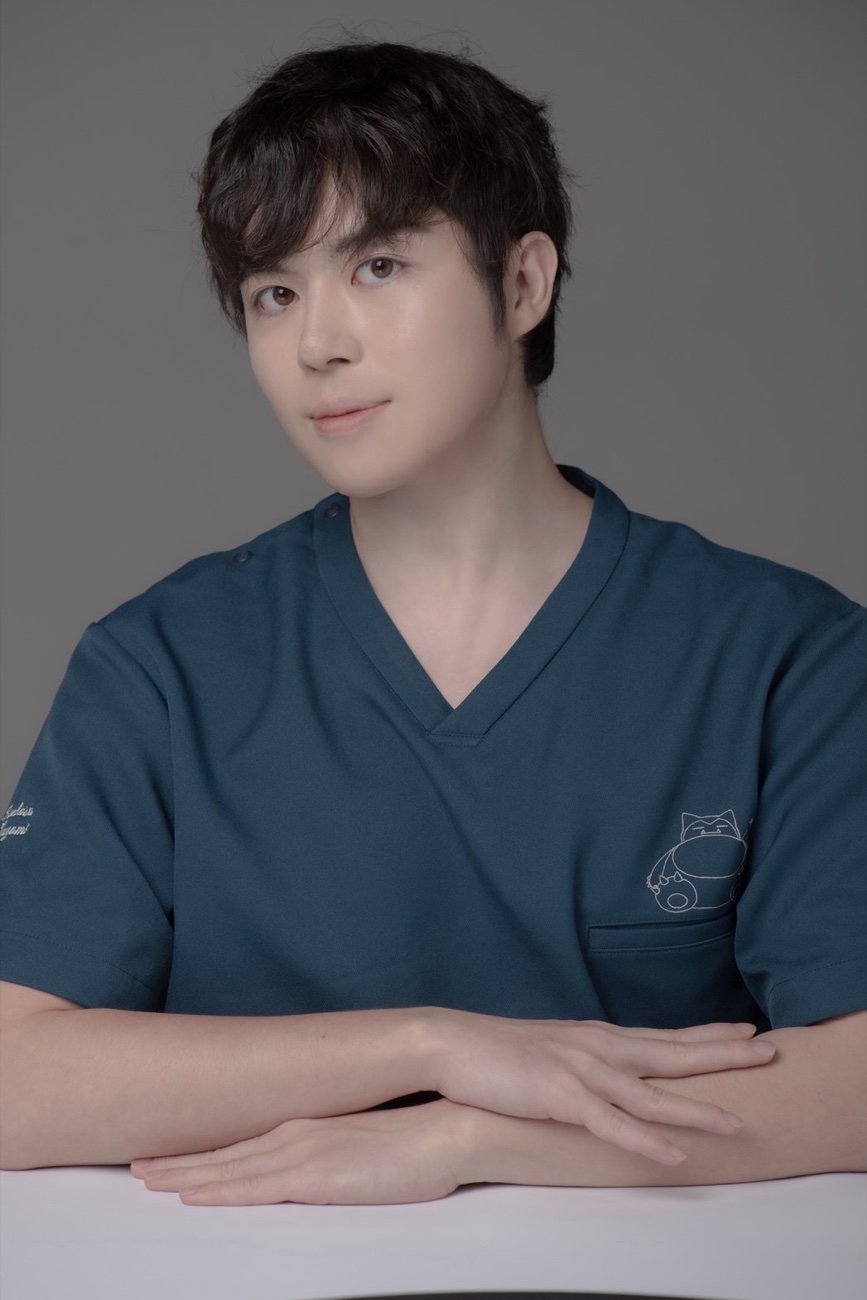
DirectorDr. Tsubasa Hayami, Clinic Director
In medical hair removal, we believe what matters is that a doctor decides “whom to treat, at what output, and at what intervals.” Skin tone and hair thickness differ for each person, and no two patients should be treated at the same settings. Being able to examine and treat reactions such as burns or paradoxical hair growth at the same clinic is what it means to have hair removal at a medical institution.
— Specialties: facial liposuction / slim-face design / facial contouring / injectables / upper arm and leg liposuction
- Graduated from Kanazawa Medical University
- Department of Ophthalmology, Juntendo University
- Director, Tennoji branch of a major cosmetic surgery clinic
- Wing clinic Toyonaka opens
- Botox Vista / Juvéderm Vista certified doctor
- Alma Tune Lifting certified physician
- Onda Lift Kansai training physician / Oligio Kiss certified physician
- Facial liposuction: 1,000+ cases (Apr 2023 – Oct 2026)
FAQFAQ
QIs medical hair removal “permanent hair removal”?
The American Electrology Association (AEA) defines “permanent hair removal” as a regrowth rate of 20% or less one month after the final treatment, and the U.S. FDA uses the term “permanent hair reduction” (a stable reduction in the number of hairs over a period longer than the hair cycle). In other words, it does not mean “not a single hair will grow for life.” Because medical hair removal acts on the hair-making tissue, longer-lasting hair reduction than salon hair removal can be expected, but fine hair may still grow due to hormonal changes and other factors.
QAbout how many sessions and how long until it’s finished?
It depends on how far you want to reduce your hair. About 6 sessions is a guide until shaving becomes easier and hair looks like vellus hair, and about 10 to aim for smooth skin. Our heat-accumulation device is less affected by the hair cycle, so you can come about once a month: about 6 months for 6 sessions and about 1 year for 10. Dense-hair areas such as VIO, both underarms, and men’s beards may take a little longer. Because hair amount, hair type, and skin tone vary greatly, we give you a guide after an examination. We cannot promise it will be “finished in X sessions.”
QHow is it different from salon light hair removal?
The output and the depth of action differ. By law, salon light hair removal cannot destroy the hair-making tissue and only reduces hair temporarily. Medical hair removal uses output that can deliver enough heat to the hair-making tissue, so long-term hair reduction can be expected, but it also carries risks such as burns and is performed under a doctor’s supervision. Another major difference is that if trouble occurs, a doctor can examine and treat it on the spot. Salons also use names like “SHR” and “heat-accumulation,” but the output they can use is different, and it is not the same as the heat-accumulation treatment at a medical institution.
QI heard the heat-accumulation method is less effective. Is that true?
It is not less effective; results just show up differently. With heat-destruction, hair falls out all at once 1–3 weeks after treatment, so changes are easy to see. With heat-accumulation, treated hair grows for a while and then falls out gradually over 2–3 weeks, and results show as the next hair growing back finer and sparser. Because it is less affected by the hair cycle, you can come about once a month, which actually shortens the overall period. Rather than “it didn’t fall out = it isn’t working,” we judge by the condition of the next hair. If you are worried about how results are showing, we check your hair at an examination.
QDoes the heat-accumulation method work on thick hair and men’s beards?
Yes. Thick hair such as the underarms, VIO, and men’s beards takes many sessions with any method. With heat-accumulation, hair does not visibly fall out all at once, so we judge results by how fine and sparse the next hair is. Areas with thick, dense hair tend to feel the heat strongly, so we proceed while reducing pain with cooling, output adjustment, and numbing cream on request.
QHair grew back in patches after treatment. Were spots missed?
Not necessarily. Hair has a cycle of growth, regression, and resting phases, and hair that was resting beneath the skin at the time of treatment may grow out later, temporarily looking patchy. It evens out as sessions add up. However, if hair remains clearly in lines or patches, spots may have been missed, so please contact us within 1 month of the treatment date. A doctor will check it, and if it is judged to be a missed spot, we will retreat it free of charge.
QCan I be treated if I’m tanned? My skin is naturally dark.
Right after a tan, melanin in the skin increases and the risk of burns and pigmentation rises, so we postpone treatment until the skin tone settles. For naturally darker skin, treatment is often possible after adjusting the output and settings and checking the reaction with a test shot. During your treatment period, avoid tanning for about 2 weeks before and after each session and keep up daily sun protection.
QHow painful is it? Is anesthesia available?
Our heat-accumulation device feels mainly like a gradual, lasting warmth, with less momentary pain than the “rubber band snap” of heat-destruction. Even so, heat may feel strong in thick-hair areas such as the underarms, VIO, and beard, and in areas close to bone such as the shins and knees. We reduce pain with cooling and output adjustment, and numbing cream (3,300 yen per area) is available for areas prone to pain. If the pain is strong, output can be lowered even during treatment, so please tell us rather than putting up with it.
QCan I be treated during my period?
We do not treat VIO during menstruation for hygiene reasons and infection risk. Other areas can be treated, but skin may be more sensitive and feel more pain during your period. If a booking that includes VIO overlaps with your period, please contact us to reschedule.
QCan I have it while pregnant or breastfeeding?
We do not treat during pregnancy. While breastfeeding, hormones can make results harder to achieve and skin trouble more likely, so please consult us after an examination. If you find out you are pregnant during your treatment period, treatment will be paused.
QCan minors receive treatment?
Yes, with parental consent. However, during growth, hormonal changes make hair more likely to regrow, and new hair may grow after hair removal is finished. With this understood, we decide the timing together. Minors need a parental consent form (provided at the consultation).
QDoes it work on white hair or vellus hair?
Lasers that react to melanin cannot be expected to work on lightly pigmented hair such as white or blond hair. Vellus hair has little pigment, so it takes more sessions than thick hair, and it is also where paradoxical hair growth (a reaction that makes hair thicker) occurs more easily. We check your hair type at the examination and will tell you honestly if results are not expected.
QHow should I shave before treatment? What if I miss spots?
Please shave the treatment areas the day before or on the day with an electric shaver, not a razor. Razors scrape the surface layer of the skin and easily leave tiny cuts, which can cause redness and pigmentation after treatment (Shaving before treatment). Tweezers, wax, and hair removal cream pull out the hair root so treatment will not work, so please do not use them for 1 month before treatment. You do not need to force yourself to shave areas that are hard to reach yourself, such as the back, nape, and O-line. Staff will shave missed spots on the day for 1,100 yen per area. Shaving when you come without shaving is 2,200 yen per area.
QCan I switch from another clinic or salon?
Yes. You can start once about 1 month has passed since your last treatment. If you tell us the device used, number of sessions, and any skin trouble so far, we can plan the output and intervals based on your remaining hair and whether there is paradoxical hair growth. Switching from heat-destruction to heat-accumulation is no problem.
QCan moles, spots, or tattoos be treated over?
Moles and dark spots may burn because their pigment reacts to the light, so they are covered and avoided during treatment (hair growing from moles cannot be treated). For the same reason, we cannot treat over tattoos or permanent makeup.
QHow long does treatment take?
As a guide, a few minutes to about 10 minutes for both underarms, about 15–30 minutes for the face or VIO, and about 1.5–2 hours for the full body. The first visit adds time for the examination, consultation, and test shot.
QIs there anything to be careful about after treatment?
On the day, cool and moisturize the treated areas. Avoid baths, saunas, strenuous exercise, and alcohol that day, and keep showers lukewarm and short. Hair falls out gradually and naturally over 2–3 weeks after treatment, so please do not pluck it. Continuing sun protection and moisturizing throughout helps prevent skin trouble.
QCan I come just for a consultation? Can I be treated the same day?
A consultation only is fine. We check your skin and hair at the examination, explain how treatment would proceed, a guide to the number of sessions, and the risks, and you can then take your time to decide at home. Same-day treatment may be possible if there are no issues with shaving, tanning, or your skin condition.
Contact us Booking & Inquiries
You can also book or ask questions via LINE!
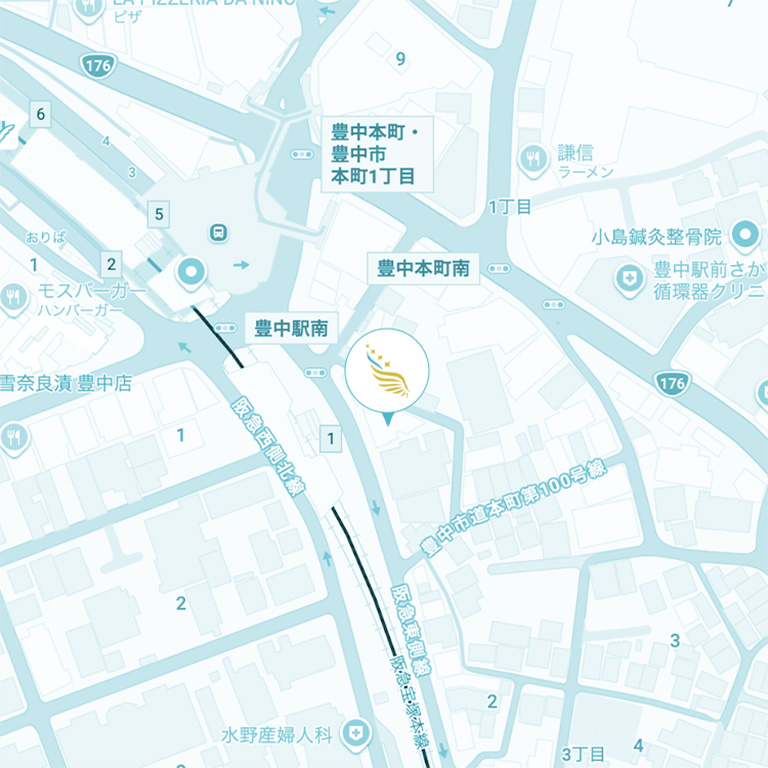
Access
View on a larger map4F Toyonaka Ekimae Yasuda Building, 1-2-35 Honmachi, Toyonaka, Osaka
- 1 minute walk from Hankyu Toyonaka Station / 11 minutes by train from Umeda Station
- 15 minutes from Itami Airport / 15 minutes from Shin-Osaka Station
Hours
10:00–20:00 (last entry 19:00)
Closed: irregular *For more information, please contact us.
Departments: Cosmetic Dermatology, Cosmetic Surgery, Internal Medicine, Dermatology